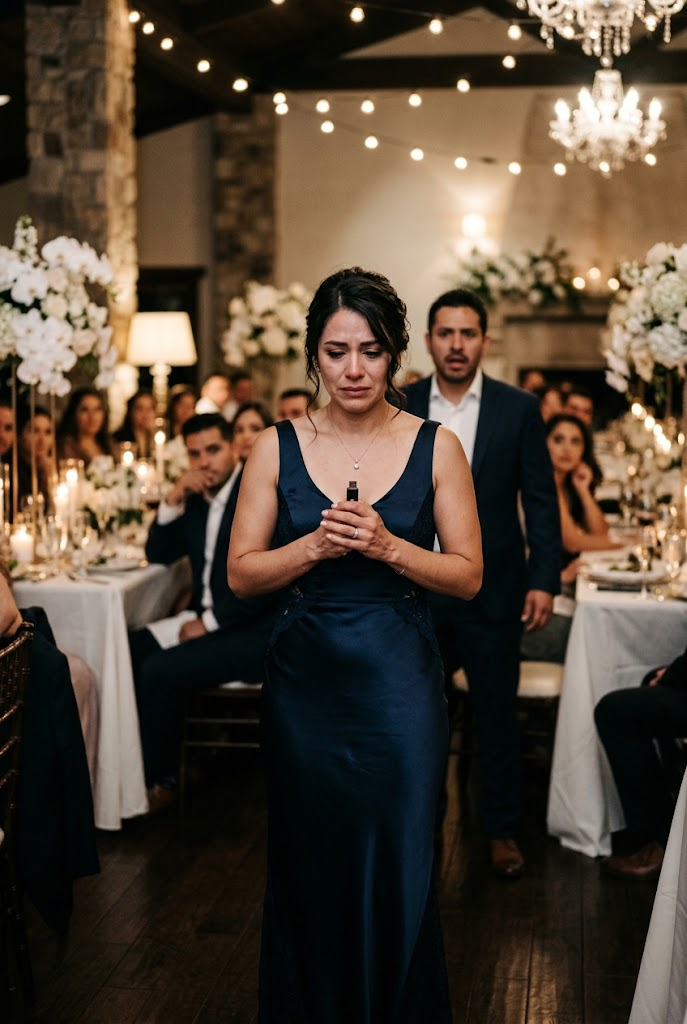
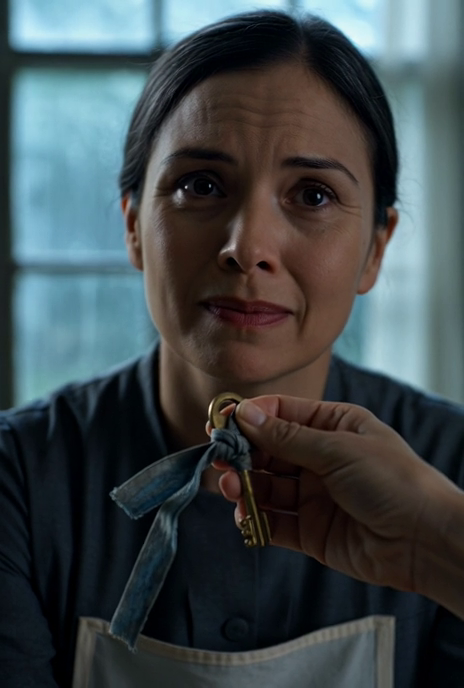
The security guard had my husband listed as a married man.
That wasn’t the problem.
The problem was the name entered beside the word wife.
Celia Shaw.
I was Colonel Miriam Shaw, fifty-seven years old, with thirty-one years in the Army and twenty-nine years of marriage behind me.
On a Monday in September, I had driven almost three hours from Fort Riley to Kansas City because a training evaluation ended four days early.
I bought Peter a lemon cake from the bakery he loved and balanced the white box on the passenger seat like it was something precious.
I wasn’t looking for a scene.
I wanted an ordinary reunion.
I wanted to walk into my husband’s office, see his face light up, and go home together to the farmhouse where our daughter had learned to ride a bicycle.
At the front desk of Shaw Relief Structures, the guard listened to my request, tapped a visitor screen, and said, “Mrs.
Shaw is already in the executive suite.”
“I’m Mrs.
Shaw,” I answered.
He checked my uniform and the identification I offered him.
“Sorry, Colonel.
I meant Celia.
She’s Mr.
Shaw’s wife.”
An elevator opened behind him.
A woman in her early forties stepped into the lobby wearing a dark green suit, elegant shoes, and a silver compass pendant.
Its blue enamel had a tiny chip at four o’clock.
I knew that mark because it had happened when I dropped the compass against a field sink in Iraq.
Six soldiers from my first deployment had paid a local jeweler to make the pendant for me.
Their initials were engraved on its back.
One belonged to a medic who died before we came home.
I had kept it in a cedar box at our farmhouse, along with family photographs and my mother’s handwritten recipes.
Two employees said, “Good morning, Mrs.
Shaw,” as the woman crossed the lobby.
She smiled.
When she noticed my stare, her fingers closed over the compass.
Her smile vanished for a heartbeat, then returned.
She walked past me without a word.
“Does she work here?” I asked.
“Vice president of external relations,” the guard said.
“She handles the company events.”
I thanked him and stepped outside.
The lemon cake remained in my car.
I could have gone upstairs and demanded answers.
Thirty-one years of service had taught me that the first version of a disaster was rarely the whole disaster.
If I confronted Peter now, I would hear only the story he had prepared.
The phone vibrated in my hand.
A message from him read, “Four more days, Miri.
Can’t wait to have you home.” He had called me Miri since we met at a volunteer clinic in our twenties.
I stared at the message until it seemed written to someone else.
From the driver’s seat, I opened the company’s website.
Shaw Relief Structures built temporary shelters and mobile facilities after floods, tornadoes, and wildfires.
I had helped buy its first two trailers with part of the inheritance my mother left me.
We had agreed that I would own forty percent, Peter would own fifty, and our daughter Wren would eventually inherit the ten percent her grandfather had set aside.
I had never been an employee.
As an Army officer, I kept my outside ownership disclosed and separate from