today,” she replied.
“Not because I’m a general.
Because the facts were available from the beginning.”
As Camille collected the paperwork, her phone rang.
She answered, listened, and walked into the hallway.
When she returned, the color had drained from her face.
“Amara, the planning office has an active file for construction access across your property.
A contractor is scheduled to begin clearing the eastern garden boundary tomorrow morning.”
Amara stared at her.
“There is no easement.”
“That’s what makes this worse.
The file includes a second authorization.”
Camille held out her phone.
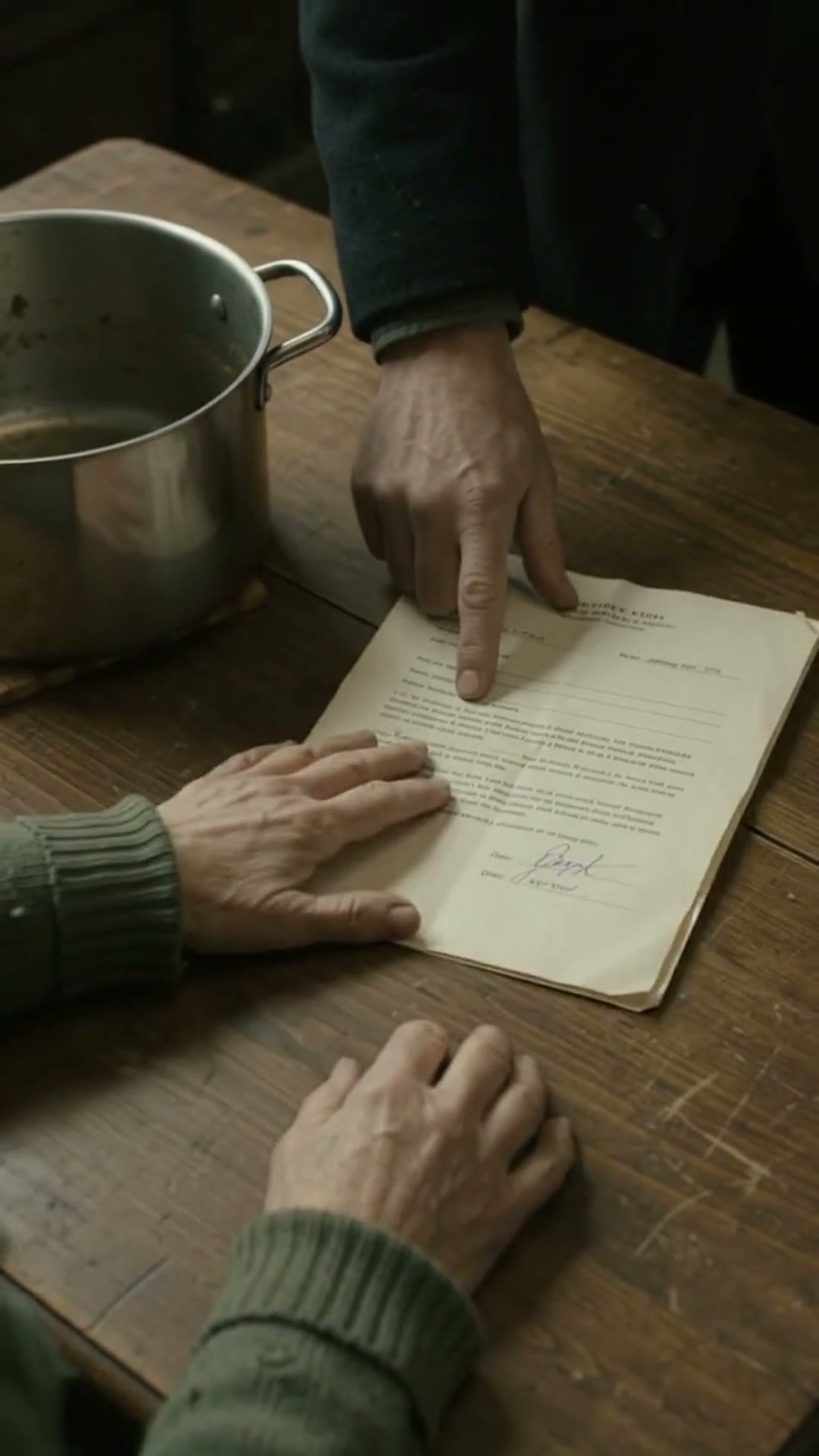
The image showed a notarized landowner consent agreement authorizing an eighteen-foot access route through the rose garden.
It was dated June 1.
At the bottom appeared the signature of Louise Bennett.
Amara’s mother had died on February 11.
For several seconds, Amara could not speak.
The signature looked so much like her mother’s that she could almost see Louise seated at the kitchen table, holding a black pen between two fingers and pressing firmly on the paper.
Then she noticed the impossible date again.
“My mother was buried on February 14,” Amara said.
“Someone signed her name four months later.”
Camille nodded.
“And a contractor is expecting access at six tomorrow morning.”
Amara stood.
“Then we have until sunrise.”
They drove directly to Camille’s office, where two legal assistants were already assembling the title records, probate documents, and planning materials.
The property file revealed why Gloria Stiles had been so determined to control the garden.
Pine Crossing Development was constructing eighteen luxury homes behind Willow Lane.
Its original site design relied on a narrow service road that local officials had flagged as inadequate for the proposed development’s emergency-access requirements.
An alternative route required permission to cross the eastern edge of the Bennett property.
Without that access, the developer faced significant redesign costs and delays.
Louise had refused a proposed easement the previous year.
Her attorney had sent the refusal in writing.
After Louise died, the developer had resumed discussions with Gloria, who presented herself as a representative of the surrounding neighborhood.
Camille turned a page.
“Look at this.”
The planning file included a letter from Gloria stating that the Bennett estate had appointed the neighborhood association to coordinate the project.
Attached was the forged management authorization bearing Amara’s name.
That document appeared to have been used to support the second, supposedly notarized consent attributed to Louise.
Neither paper reflected a genuine authorization.
“They knew I would refuse,” Amara said.
Camille nodded.
“And they wanted you off the property long enough to begin work.”
There was still something they did not know.
Why had Sergeant Rusk treated Gloria’s statements as established fact before verifying the county records?
At ten forty that night, Camille filed an emergency request to prevent entry and construction activity on the disputed portion of the land.
She attached the certified deed, Louise’s death certificate, the prior refusal letter, and the questionable authorizations.
A judge reviewed the emergency filing and issued a temporary order restraining construction on the Bennett parcel until the ownership and consent questions could be heard.
The city planning department was notified, along with the developer and its contractor.
Amara returned home shortly after midnight.
The rose garden was silver beneath the porch light.
She stood on the walkway and looked at