The first sound I remember was the metallic snap of a medal clasp against the sidewalk.
Not my husband’s voice.
Not the police officer shouting.
Not even our youngest son’s terrified scream.
Just that small, sharp sound as a ribbon came loose from Rear Admiral Solomon Reed’s dress uniform and slid across the pavement toward the gutter.
I watched the ribbon move, and for one impossible second, I thought about how carefully Solomon had pinned those medals onto his chest that morning.
He had stood before our bedroom mirror, adjusting the placement with hands that had remained steady through nearly three decades of military service.
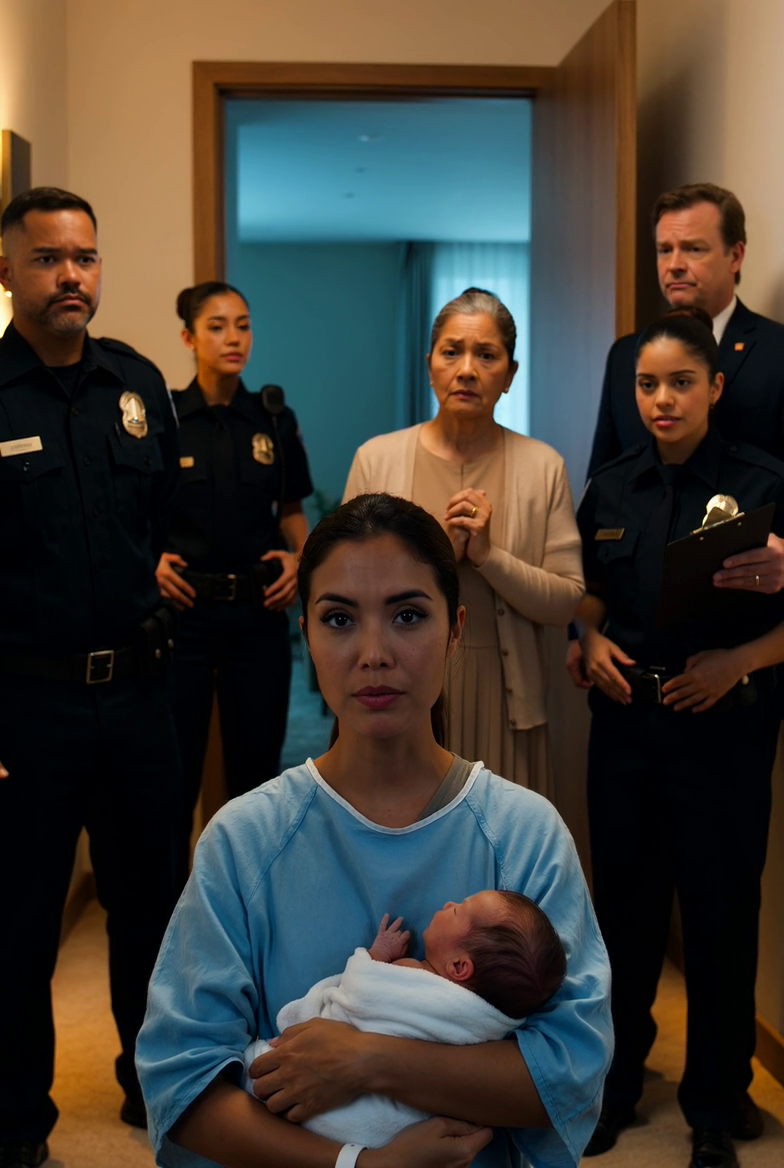
Now those same hands were being forced behind his back by a police officer who refused to listen to him.
“STOP RESISTING!” the officer shouted.
“I’m not resisting,” Solomon answered.
His voice was calm, but the pain in it was unmistakable.
Our eight-year-old son, Asher, stood beside me clutching a crumpled ten-dollar bill.
That money was supposed to buy ice cream.
Instead, my son was watching his father kneel on the pavement while a stranger treated him like a dangerous criminal.
And what happened over the next several months would expose something far more disturbing than one officer’s terrible judgment.
It would reveal how a private grudge, a fabricated emergency call and a police officer willing to believe the worst about a Black man had nearly destroyed our family.
But the story began an hour earlier, when everyone was smiling.
The Westbridge Veterans Recognition Ceremony had been held at the community arts center, a brick building with tall windows overlooking a small park in northern Virginia.
Solomon had been invited to deliver the keynote address.
He was forty-nine years old, a Black naval officer who had devoted twenty-nine years to military service.
His career had taken him across oceans, into disaster-response operations and eventually to an assignment supporting the Joint Staff at the Pentagon.
The people who knew him personally didn’t usually talk about his rank.
They talked about the way he remembered birthdays, helped elderly neighbors carry groceries and never missed a school concert unless duty made it absolutely impossible.
He was also the only man I had ever known who could command a room full of senior officers and still let an eight-year-old convince him that an extra scoop of strawberry ice cream was a reasonable financial decision.
That afternoon, Solomon spoke about veterans who returned home carrying injuries nobody could see.
He talked about duty, the families who served alongside service members and the responsibility communities carried toward one another.
Near the end of his remarks, he paused and looked across the audience.
“The value of a uniform,” he said, “isn’t that it makes the person wearing it more important.
It’s that it reminds us of an obligation to protect people who may never wear one.”
The audience stood to applaud.
Micah, our fourteen-year-old, stood taller than everyone around him.
Asher whispered to me, “That’s my dad.”
I squeezed his hand.
I had no idea how desperately I would wish to protect both of them before the afternoon was over.
The ceremony ended shortly after five.
We decided to walk home rather than drive the few blocks to our neighborhood.
The weather was beautiful, with warm sunlight settling across the sidewalks and