argued about buying another suit, so she convinced him to wear the same charcoal one from the wedding.
“It survived worse than I did,” she joked.
This time it fit differently.
Not because the tailoring had changed.
Because Tomás no longer seemed to shrink inside it.
Several survivors of the convoy attended with their families.
Elena watched grown men embrace her father and introduce children who existed partly because Tomás had helped their fathers come home.
One man brought a photograph of his eldest daughter graduating from nursing school.
Another showed Tomás pictures of three grandchildren.
Marcus Reed approached before the ceremony.
“You see why we needed you here?” he asked.
Tomás stared at the families.
His eyes glistened.
“I thought that day was about keeping seventeen soldiers alive.”
Reed nodded toward the children running between rows of chairs.
“It was bigger than seventeen.”
During the ceremony, Tomás received the Distinguished Service Cross for extraordinary heroism.
When applause filled the room, he looked uncomfortable.
Then he found Elena in the front row.
She touched two fingers to her heart.
He smiled.
Afterward, reporters asked why a soldier with his history had chosen gardening.
Tomás considered the question carefully.
“After years of seeing things destroyed,” he said, “I wanted to spend my life helping things grow.”
That became the sentence people remembered.
But fame did not transform him into someone else.
Tomás finally accepted the medical care and veterans’ benefits he had earned.
Treatment improved his knee enough that he no longer had to work twelve-hour days.
He refused offers from people who suddenly wanted a decorated veteran landscaping their estates for publicity.
Instead, he reduced his workload and began teaching horticulture twice a week through a community program for veterans transitioning to civilian life.
Elena often stopped by after work.
One evening several months later, she found him kneeling beside a young veteran who was struggling to transplant a lemon tree.
“Don’t pull from the top,” Tomás explained.
“Support the root ball.
If you damage what keeps it grounded, it won’t matter how beautiful the leaves are.”
Elena stood at the gate listening.
Her father noticed her and smiled.
Behind him, near the tool shed, the military decoration rested inside a simple wooden case.
It was not displayed at eye level.
It was not surrounded by photographs or headlines.
Tomás had placed it beside an old flour tin.
The same tin in which he had once saved money for his daughter’s wedding.
Elena walked over and touched the dented lid.
“You kept this?”
“Of course.”
“After everything that happened?”
Tomás shrugged.
“The wedding wasn’t the important part.”
She looked at him.
“What was?”
He pointed toward her.
“You were.”
Elena hugged him while the evening sun stretched across the garden.
A few feet away, new lemon trees stood in straight rows, their roots freshly settled beneath dark soil.
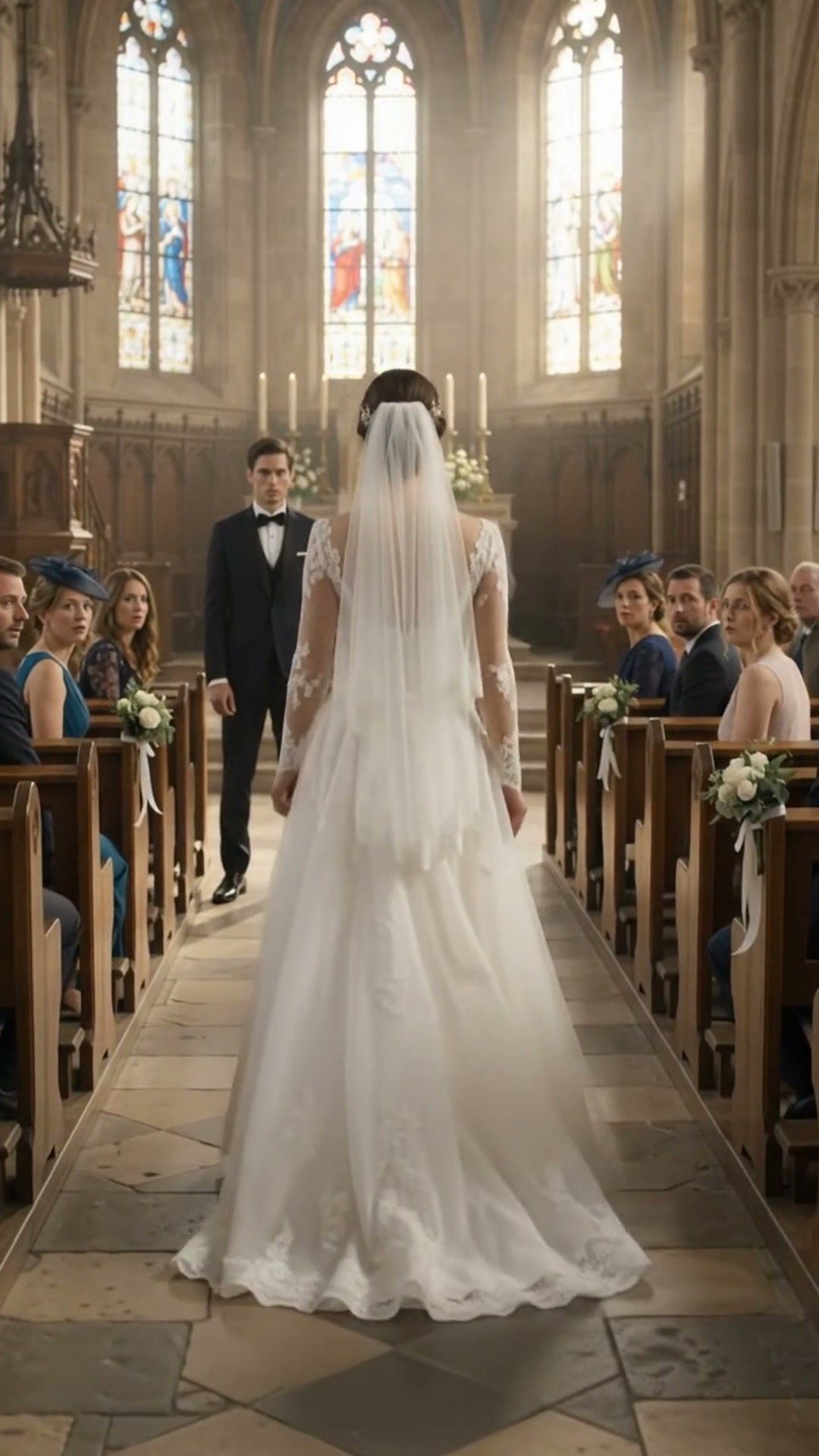
The wedding had never happened.
The expensive future Preston promised had disappeared with it.
But Elena no longer thought of that day as the afternoon she was abandoned at the altar.
She remembered it as the day her father finally stopped apologizing for the life he had built.
And when Tomás returned to the garden the next morning, he wore the same faded work gloves he always had.
Only now, when people