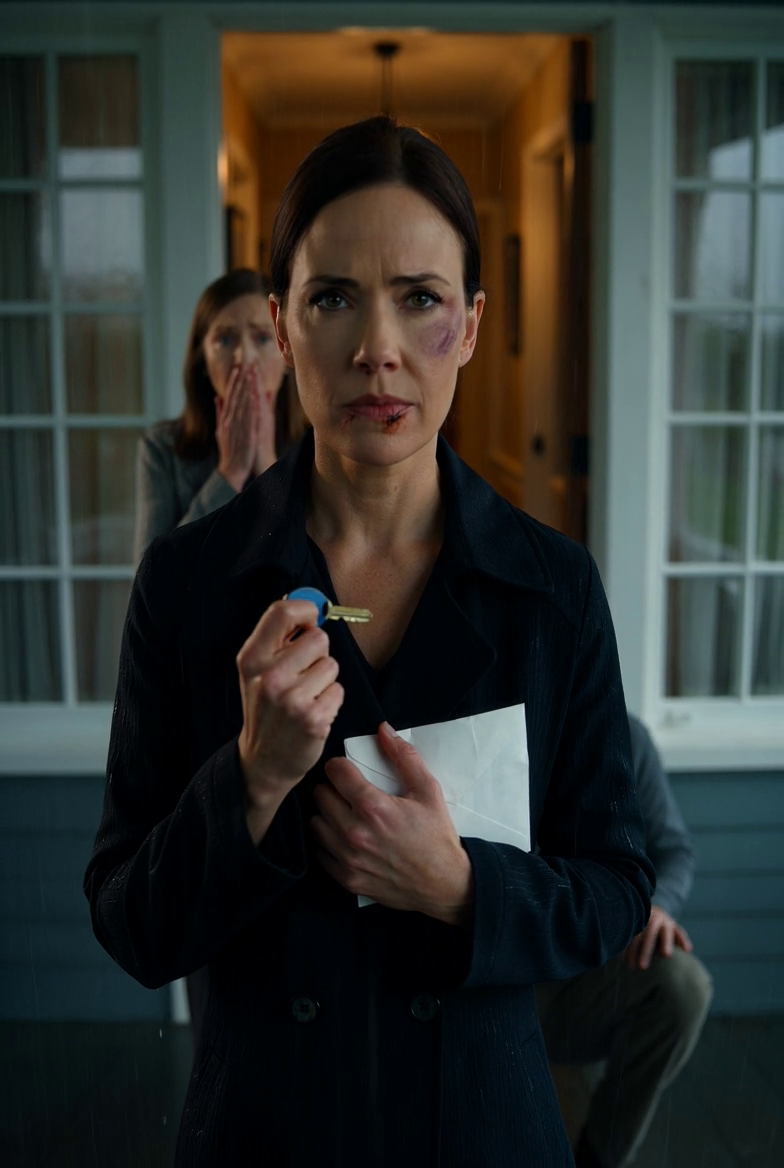
while carrying a baby.
Inside the lining, I’d sewn two letters in pale gold thread.
B and M.
I’d imagined wearing it when we brought Benjamin and Mae home.
Lydia noticed me looking at the stitching.
“It’s lovely,” she said.
“Graham thought I could use it.”
A nurse directed us into a small consultation room beside the NICU.
The babies remained under the team’s care, beyond the glass doors.
Graham placed a leather folder on the table.
“Sign these.”
I opened it.
The first page identified it as a proposed marital settlement agreement.
My husband wanted the condominium, both vehicles, the investment accounts, and nearly every valuable possession we owned.
There were paragraphs concerning future support and a broad waiver of financial claims.
Attached near the back was a separate corporate consent form.
That was the first thing that made me pause.
“Why is a company authorization attached to our divorce agreement?” I asked.
Graham closed the folder halfway.
“Standard paperwork.
My lawyers handled it.”
“Which lawyers?”
“Nora, don’t start.”
He tapped the pen against the table.
“The accounts are restricted.
Your cards won’t work.
The condo is being handled.
You’ll have to make other arrangements when you’re discharged.”
My surgical incision hurt every time I breathed too deeply.
Still, I managed to look up at him.
“Our children were born yesterday.”
“And I hope they recover,” he replied.
“But I’m not sacrificing my future because you can’t manage yours.”
Lydia lowered her gaze to her handbag.
He continued.
“Your parents are dead.
You have almost no friends.
You gave up your career.
Everything you have comes through me.”
I watched him speak as though he were reviewing quarterly expenses.
Then he said something I would remember for the rest of my life.
“You have nobody left to call.”
He was wrong.
But I wasn’t ready to tell him why.
I took his pen, reviewed the pages carefully, and wrote my name beneath each signature line he indicated, adding the same small notation every time.
Received under protest.
Not consent.
Graham was too impatient to examine what I’d written.
He swept the documents into his folder and smiled at Lydia.
“That was easier than expected.”
I reached for my phone.
“What now?” he laughed.
“A charity? A homeless shelter?”
I opened my contacts.
One name had been there since I was eighteen.
COLONEL SAMUEL REED.
“Samuel,” I said when he answered.
“You can come upstairs now.”
CHAPTER TWO — THE MAN MY HUSBAND UNDERESTIMATED
Colonel Samuel Reed had served with my father for more than two decades.
My father, Benjamin Shaw, had been an Army medical evacuation pilot.
He was the kind of man who saved every birthday card, repaired anything that broke, and believed preparation was a form of love.
Samuel was his closest friend.
After my father died unexpectedly when I was twenty-one, Samuel continued checking on my mother and me.
When my mother passed away five years later, he attended the funeral, helped me deal with the paperwork, and told me something I hadn’t understood until much later.
“You don’t have to carry every burden alone to prove you’re strong.”
Samuel wasn’t my biological relative.
But he’d been my godfather since infancy, and he had never treated that responsibility lightly.
He also served as trustee of Windward