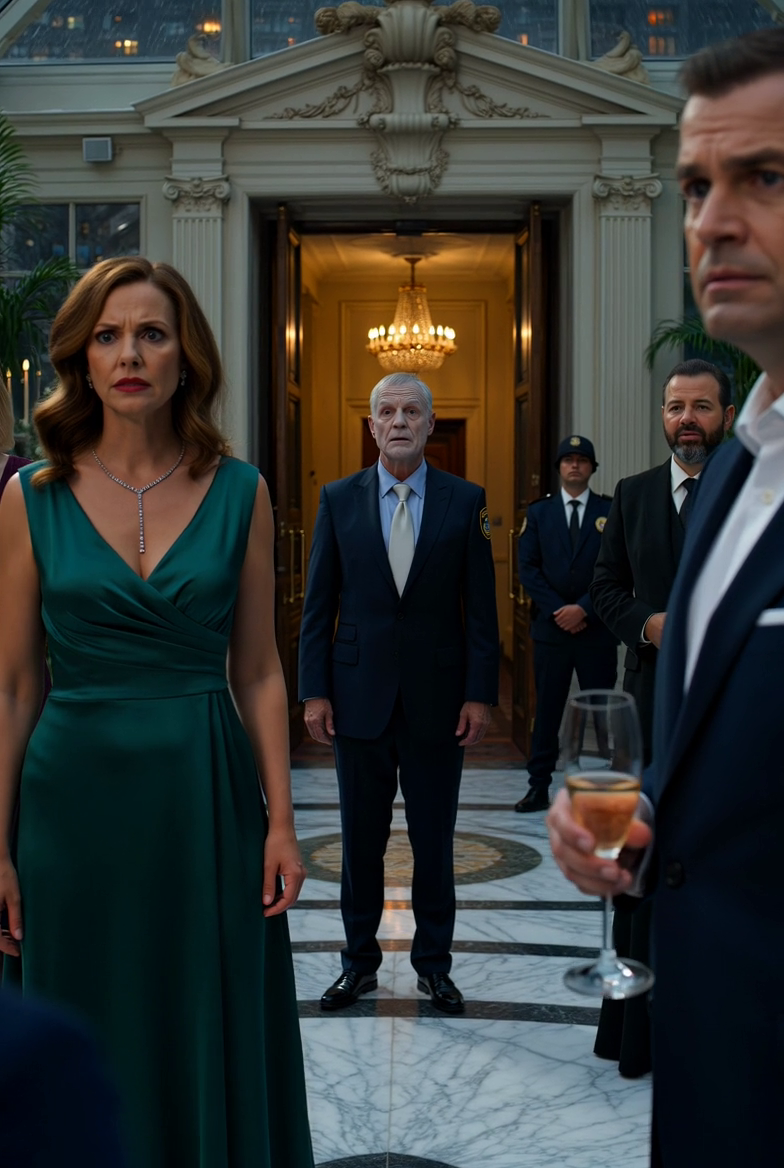
prosecutor slowly turned toward him.
The recording continued.
“You’re using Raven Six to test the source?”
“I’m using the situation to verify intelligence.”
“What happens if they make contact?”
“Then we learn something.”
The audio ended.
For several seconds, nobody moved.
Mara stood so quickly her chair struck the wall.
“You knew?”
Rourke didn’t answer.
“You knew the route might be compromised before you sent us in?”
“Mara,” the prosecutor warned softly.
But three years of grief had finally found the man responsible.
“You sent six people into that valley to see whether someone would shoot at us?”
Rourke’s face hardened.
“It wasn’t that simple.”
“Thomas Lennox had a wife.”
“I know.”
“He had a four-year-old daughter.”
“I know.”
“No,” Mara said.
“You knew his name.
That’s different.”
Rourke looked toward the panel.
“The intelligence from Lantern Ridge disrupted a network responsible for multiple attacks.
Command decisions are not made with perfect information.”
Mara’s eyes burned, but her voice remained steady.
“Then why did you erase the record?”
That question broke him.
Not dramatically.
There was no confession shouted across the courtroom.
His shoulders simply lowered.
For the first time, the medals on his chest looked heavy.
Rourke’s attorney requested a recess.
Judge Holt granted it.
Before Rourke could leave the courtroom, military investigators approached him.
He was informed that additional charges were being referred for investigation, including obstruction, false official statements, evidence destruction, and conduct arising from the deliberate concealment of operational risk.
The trial did not end that afternoon.
Real consequences rarely arrived as neatly as stories suggested.
There were motions.
More classified hearings.
Arguments over admissibility.
Witnesses recalled from four states and two overseas assignments.
Mara testified for eleven hours over three days.
Calder testified by video from Colorado.
Ruiz appeared in person and placed the damaged radio battery on the evidence table.
Two former flight crew members described sitting beside ready aircraft while Rourke’s stand-down order remained in effect.
The most difficult testimony came from Captain Naomi Lennox, Thomas’s widow.
She entered the courtroom carrying no photograph.
No dramatic keepsake.
Only a yellow legal pad.
She faced Rourke during sentencing.
“For three years,” she said, “I told our daughter her father died because weather and terrain made rescue impossible.
That was the explanation your report gave us.
I taught her not to hate anyone for it.”
Naomi paused.
“Now I have to tell her that people were available to help him and someone chose not to send them.”
Rourke lowered his eyes.
Naomi’s voice did not rise.
“I don’t want revenge.
I want the truth to become permanent enough that nobody can rewrite it again.”
That sentence stayed with Mara.
The panel ultimately convicted Rourke of multiple offenses tied to falsifying records, obstruction, dereliction of duty, and the destruction and concealment of operational evidence.
Some of the most serious allegations required separate proceedings because classified authorities and command responsibilities overlapped, but his career was over long before the final sentence was announced.
His decorations did not disappear from the world.
They simply stopped protecting him from it.
Months later, the Department issued a corrected account of Lantern Ridge to the families and surviving members.
Portions remained classified, but the central lie was removed.
Raven Six had not recklessly abandoned its mission boundaries.
The unit had been