me.”
“And you approved the closure anyway.”
“Yes.”
Marcus nodded once.
“Then this morning did not begin in seat 1A.
It began when this company decided summaries were more convenient than people.”
The room went quiet.
The investigation lasted three weeks.
Independent outside counsel interviewed passengers, crew members, supervisors, security personnel, and employees who had handled earlier complaints.
The investigators reviewed onboard reports and training records.
They examined whether employees had been treated consistently under existing discipline policies.
Marcus refused demands from social media users who wanted Jennifer fired publicly within hours.
“Due process matters even when the video looks terrible,” he told Meridian’s board.
“If we claim fairness is important, we do not abandon fairness when we are angry.”
The completed report was worse than he expected.
Jennifer had been the subject of four prior complaints describing unusually aggressive ticket challenges involving Black or Latino premium passengers.
Two witnesses in separate incidents had reported hearing remarks about whether passengers “fit the cabin.”
The company had never established those claims conclusively because investigations had been shallow.
The report also found that Elena Cruz had not participated in the earlier cases.
On Flight 702, however, she had failed to intervene decisively after verifying Marcus’s ticket.
David Park had approved closures he had not personally reviewed.
The board adopted the investigators’ recommendations.
Jennifer’s employment was terminated under Meridian’s established conduct rules after the disciplinary process concluded.
Elena received a final written warning, additional leadership training, and temporary removal from supervisory assignments.
Investigators credited her for eventually telling the truth about the earlier complaint but faulted her for allowing the confrontation to continue after she knew Marcus’s ticket was valid.
David was removed from authority over customer complaint investigations and later transferred out of regional operations.
But Marcus refused to pretend personnel changes solved everything.
He ordered Meridian to rebuild its complaint system.
Discrimination allegations could no longer be reclassified by local managers without independent review.
Premium-cabin ticket disputes would be logged with the same standards for every passenger.
Employees were given clear authority to resolve genuine seating mistakes without treating suspicion as evidence.
Most importantly, station performance would no longer be rewarded for simply reducing the number of unresolved complaints.
Marcus called the old metric “an incentive to make problems disappear instead of making them better.”
Six weeks after Flight 702, Marcus returned to Chicago.
No cameras were invited.
No press conference waited.
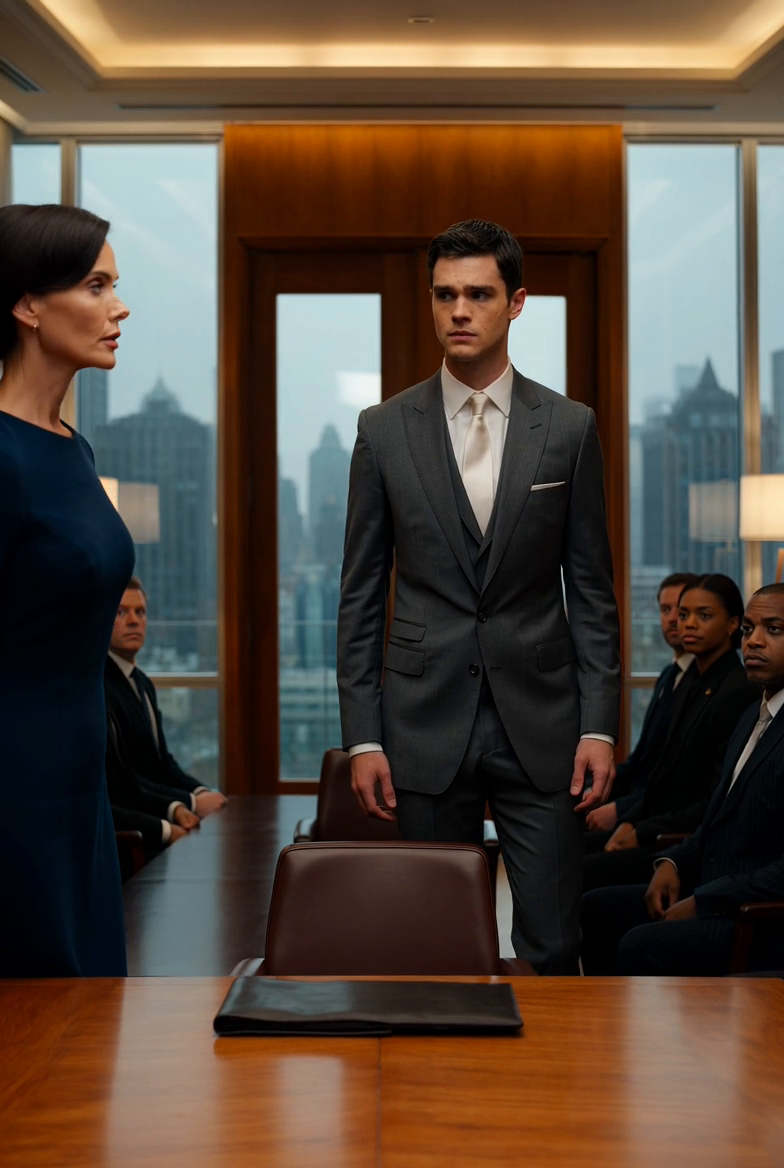
He asked to meet Officer Benton, Elena, several frontline employees, and the passenger whose complaint had been closed the previous year.
That passenger was a civil-rights attorney named Samuel Price.
Samuel entered the conference room carrying a folder almost identical to the one Marcus had carried aboard Flight 702.
“I thought nobody at Meridian would ever read this,” Samuel said.
Marcus opened the original complaint.
“I read it.”
Samuel studied him.
“Because it happened to you.”
Marcus did not deny it.
“Yes.”
Samuel nodded slowly.
“That’s usually how institutions learn.
Somebody important finally experiences what unimportant people have been describing for years.”
The words landed harder than any insult Jennifer had made.
Marcus closed the folder.
“Then my job is to make sure the next person does not need to become important first.”
Months later, Marcus boarded another Meridian flight.
This time he wore jeans, a navy sweater, and