image of my wedding.’ Her smile remained fixed.
‘Please don’t make this difficult.
People are looking.’
For a moment, I couldn’t speak.
Then she leaned closer.
‘You’re being too much.’
Behind her, my mother suddenly became fascinated by the flowers.
My father stared straight ahead, his jaw rigid.
Neither of them said a word.
I looked at the sister I had carried through fire.
I wanted to ask when I had become embarrassing.
I wanted to ask whether the photographs mattered more than the body that had shielded hers from the flames.
Instead, I lowered my eyes and reached for the wheels of my chair.
I had spent twelve years learning how to endure pain without letting strangers see it.
I thought I could endure this, too.
Then a chair scraped against the floor at the front of the church.
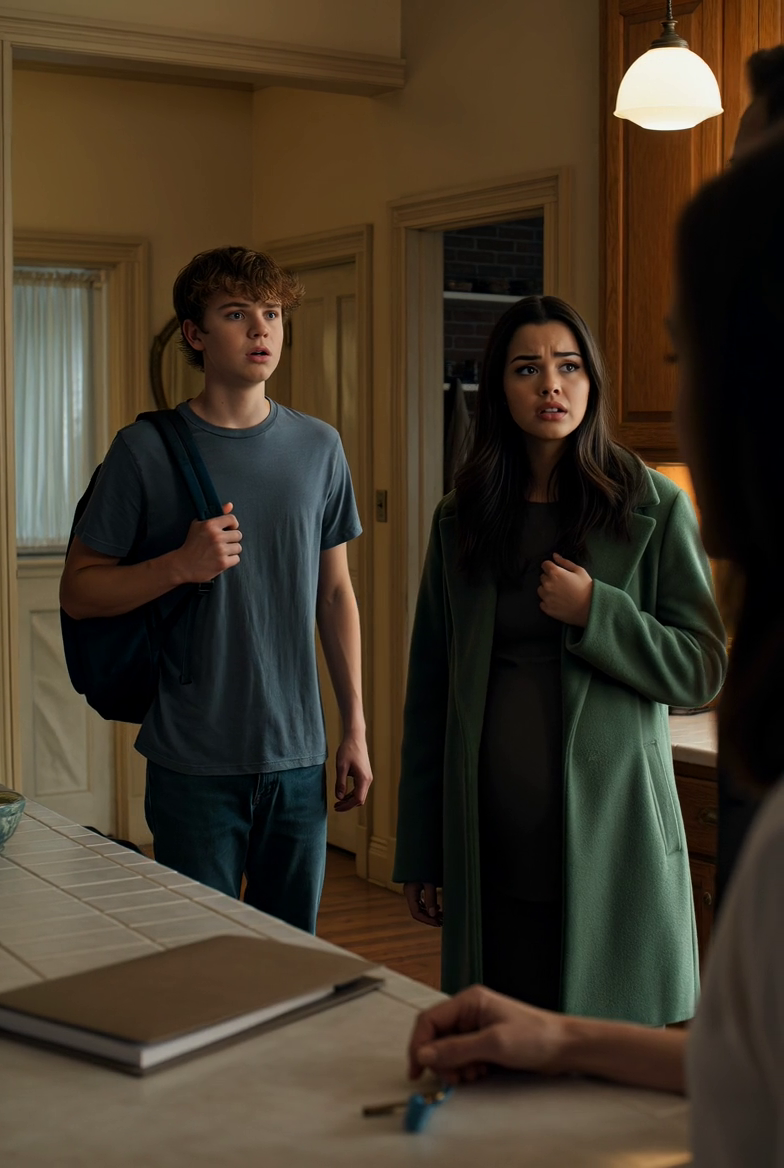
Margaret Callahan, the groom’s mother, stood up.
She was tall, silver-haired, and dressed in deep green silk.
She had the composed presence of someone who never needed to raise her voice to command a room.
The organist stopped mid-note.
Emily turned, startled.
Her fiancé, Daniel, looked from his mother to his bride, trying to understand what had happened.
Margaret looked at Emily, then at my parents, and finally at me.
Her face did not soften.
She spoke five words.
‘She saved your life, Emily.’
The church went silent.
Emily’s face lost its color.
‘Margaret,’ she stammered, ‘this is a family matter.’
‘No,’ Margaret replied.
‘What you just did is a matter of character.’
She stepped into the aisle.
‘I was a nurse in the burn unit when Natalie was brought in that night.
I remember the emergency calls, the surgeries, and the seventeen-year-old girl whose first concern, even when she could barely stay conscious, was whether her little sister had survived.’
I stared at her.
It had been twelve years.
I remembered fragments of the hospital, the voices, the pain.
I did not remember every person who had cared for me.
But I remembered asking about Emily.
Margaret continued.
‘Your sister suffered burns across more than half her body.
She endured repeated operations, painful rehabilitation, and years of recovery.
She was a child herself.
And she put herself between you and the fire without stopping to calculate what it might cost her.’
Emily shook her head.
‘I know what she did.’
‘Do you?’ Margaret asked.
‘Because a moment ago, you treated her as though her survival had become an inconvenience to your photographs.’
A murmur passed through the congregation.
The photographer lowered his camera.
Several guests looked toward my parents, waiting for them to defend me.
My father remained silent.
My mother whispered, ‘Please, let’s not do this here.’
Margaret turned toward her.
‘Where would you prefer to do it? In a hallway where nobody can hear? At home, where you can pretend this never happened?’
Mom flinched.
Margaret looked back at Emily.
‘I remember your sister asking whether you were alive before she asked what had happened to her own body.
That is the person sitting in the second row.
And you have just asked her to hide.’
Emily’s eyes filled with tears.
‘I just wanted everything to be perfect,’ she said.
Daniel finally stepped away from the altar.
‘Perfect for whom?’ he asked.
She turned toward him.
‘Please,