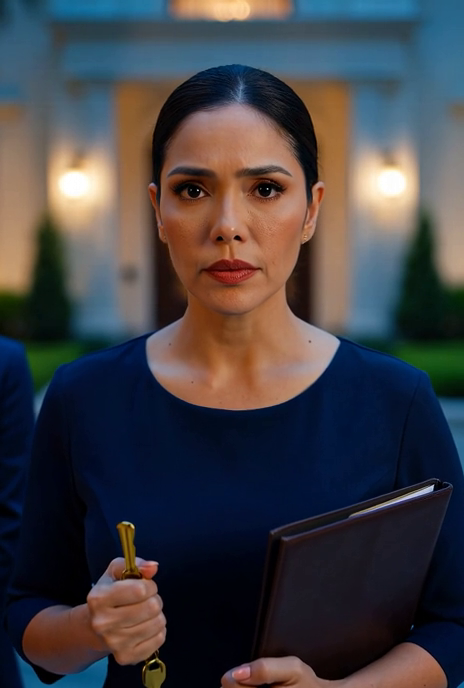
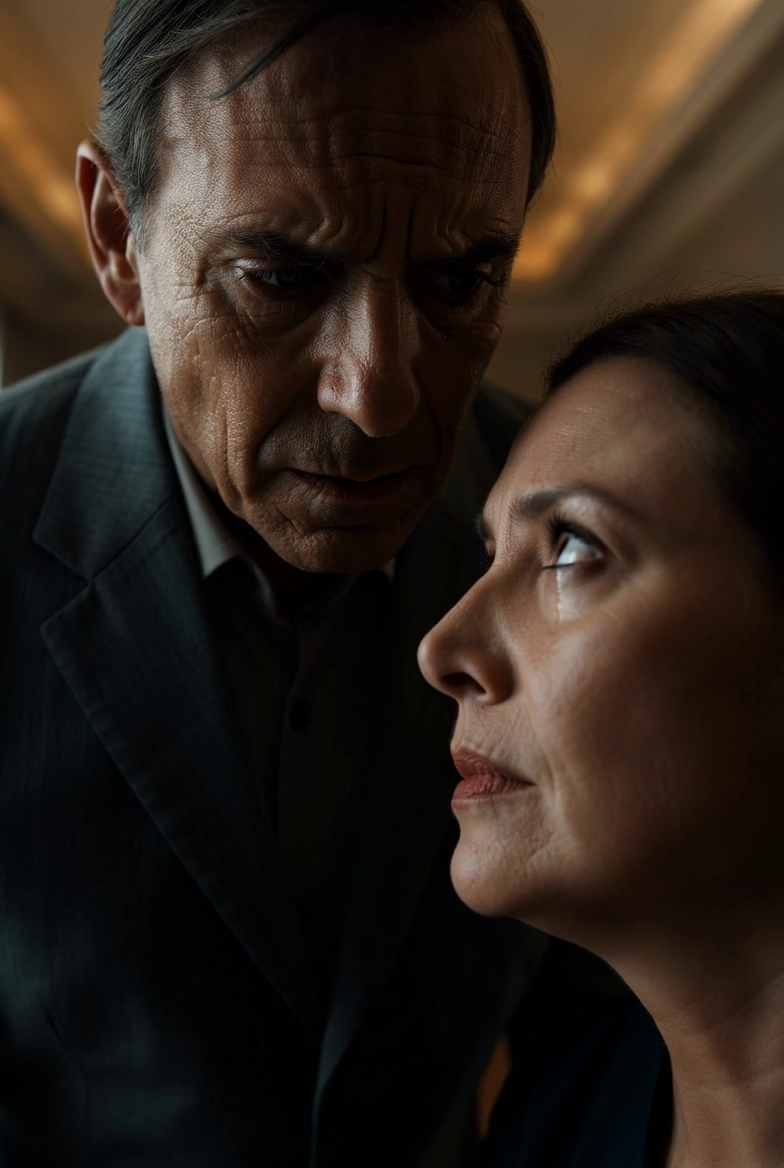
to leave, but the officers were investigating more than a disagreement over paperwork.
They had a report of a staff member being confined in a locked area and a physical confrontation involving the removal of an exhibit page.
Sabine subsequently identified Miles from a group of staff and contractor photographs provided to investigators.
The venue’s security footage showed him entering the north corridor and leaving through the west stairwell carrying the document case.
What happened next did not end in a dramatic confession.
It began a much longer process.
The removed page was recovered during the investigation, and specialists compared it with Sabine’s photographs and the surviving register.
Lawyers obtained preservation orders.
Investigators subpoenaed trucking records, foundation correspondence, and electronic access logs.
Forensic examiners revisited the surviving physical evidence from the fire.
The original report had overlooked an important detail: damage to the north exit was consistent with an exterior locking mechanism that should not have been installed while workers were inside.
Electronic records from a separate security contractor identified a temporary override on the night of the fire.
Financial investigators found that shipment 614 and several related deliveries had been designated for medical clinics but redirected to private buyers through companies linked to the foundation’s redevelopment program.
The generators had not been surplus.
The clinics had never canceled their orders.
And the documents purporting to show the cancellation had been fabricated.
Gabriel’s signature appeared on several release authorizations.
He had approved the diversion scheme after receiving deliberately misleading descriptions of the cargo, but investigators also found evidence that he had ignored warnings about the legitimacy of those transactions.
His criminal organization had profited from the arrangements.
Celeste had managed the false paperwork, and Miles had carried out instructions intended to prevent the original records from becoming public.
The investigation into the fire took longer.
A former warehouse supervisor eventually agreed to cooperate after investigators confronted him with contradictory access records and testimony from surviving employees who had worked nearby that night.
He described orders to restrict movement around the north exit shortly before the blaze.
Further evidence connected Celeste and an associate to a deliberate effort to destroy the warehouse’s paper shipping records.
The scheme had been presented to lower-level participants as a way to eliminate documents from an empty building.
But the warehouse was not empty.
Luc and two other workers were still inside.
The subsequent attempts to conceal the locked exit, falsify the safety report, and blame Luc transformed what had originally been treated as an industrial accident into a major criminal investigation.
Elise followed every development.
She attended meetings with Ruth, reviewed documents she could barely bear to read, and helped identify her father’s notes in the recovered shipping register.
When the authorities asked about the French sentences in his notebook, she translated them carefully.
For years, French had been the language of family and affection.
Now it became one of the ways her father could finally tell the truth.
Fourteen months after the dinner at La Verrière, Celeste faced trial on charges connected to the diversion scheme, the destruction of evidence, and the fatal warehouse fire.
The courtroom was full on the day Elise testified.
Her mother sat in the second row, holding the faded photograph of Luc that Elise had once carried around her