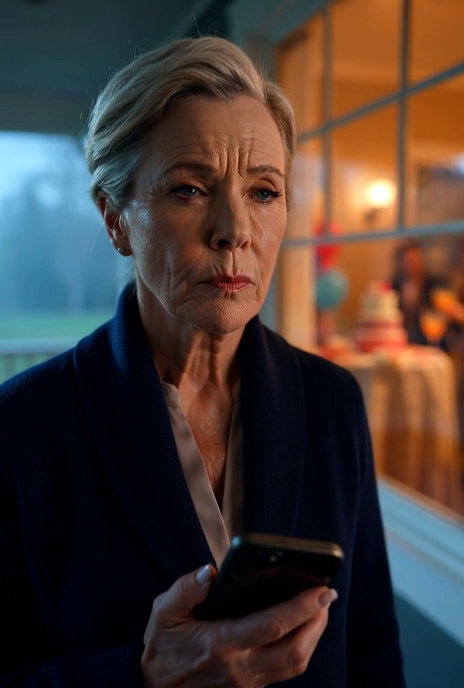
The judge had barely finished speaking when my husband smiled at my unborn child.
Not at me.
At my stomach.
As though the baby inside me had just lost something too.
I was thirty-four weeks pregnant when I sat alone in a Seattle family courtroom listening to Judge Miriam Cole explain why almost everything I had spent seven years building would remain with my husband, Adrian Crowe.
The waterfront house wasn’t technically ours.
It belonged to the Crowe Family Residential Trust.
The investment accounts weren’t technically his.
They were held by corporate entities created before our marriage.
Crowe Dynamics, the technology company I had helped Adrian build from a rented apartment, was supposedly his separate property because of agreements bearing my signature.
Even the stock portfolio I believed we had funded together had been pledged through another holding company.
I would leave with my clothes, my twelve-year-old sedan, several pieces of furniture, and medical insurance through the end of my pregnancy.
No meaningful property award.
No ownership in the company.
No immediate alimony beyond a narrow temporary order that would barely cover rent.
Judge Cole’s face showed discomfort as she looked down at me.
“Mrs.
Crowe, I understand this result may feel deeply inequitable.
But based on the evidence presently before the court, I cannot distribute assets that have been established as separate or third-party property.”
Presently before the court.
Those words would matter later.
At the time, all I heard was nothing.
I had grown up with nothing.
Now I was returning to it with a son due in six weeks.
The baby pushed hard beneath my ribs, and I pressed my palm against the movement.
Across the aisle, Adrian adjusted the cuff of a suit that cost more than my first car.
He looked relieved.
No.
Pleased.
Seven years earlier, Adrian had been the first person who ever made me believe permanence was possible.
I had grown up moving through foster homes from Tacoma to Spokane, carrying my belongings in whatever bag the last social worker could find.
At eighteen, I aged out with a state scholarship, two hundred and twelve dollars, and a determination never to depend on anyone.
I studied industrial design.
Adrian studied finance.
We met at a university entrepreneurship event where he spent twenty minutes criticizing the ugly prototype I had placed on a folding table.
Then he stayed another hour helping me fix it.
At twenty-six, I married him.
At twenty-eight, we founded Crowe Dynamics.
The company’s first successful product began as a sketch in a blue notebook: a modular emergency-power unit designed for hospitals, shelters, and remote communities during grid failures.
I created the housing system, thermal layout, and interchangeable battery architecture.
Adrian found investors.
He was brilliant at making people believe the future had already arrived and he alone held the key.
When reporters started calling him a visionary founder, I didn’t object.
I disliked interviews.
He loved them.
We told ourselves we made the perfect team.
Then success changed the pronouns.
Our design became his technology.
Our company became his company.
Our sacrifices became the story of how Adrian Crowe had risked everything.
Whenever I complained, he kissed my forehead and said, “You know what you mean to me.
Why do you need strangers to know too?”
I accepted that