that the future he imagined was already arriving.
What he lacked was patience.
He hated slow growth.
The Cambridge location was supposed to transform his single restaurant into a recognizable hospitality brand.
He talked about private dining, corporate events, eventually New York.
Every conversation became larger than the last.
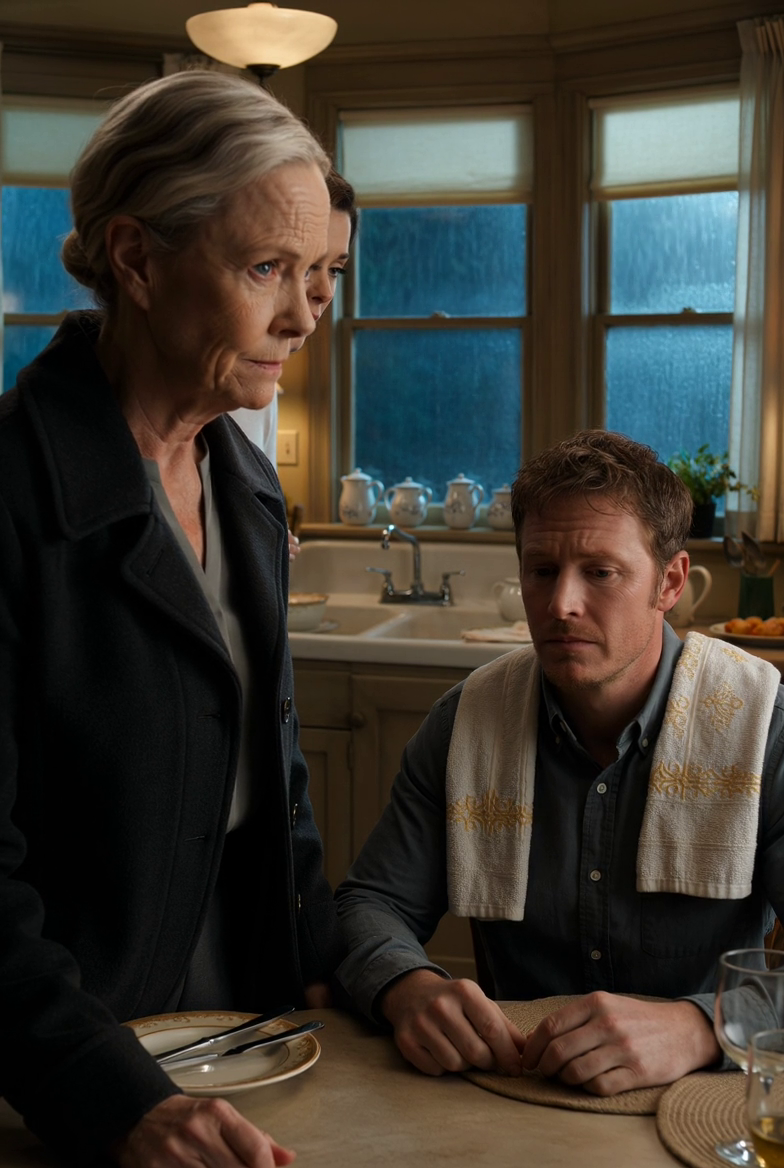
“The financing group wants additional security before releasing the final tranche,” he said.
Camille added, “It’s very normal at this stage.”
Miles pulled out the documents.
“We would use the brownstone as collateral for a limited bridge facility.”
I looked from him to Camille.
“My brownstone?”
“Just temporarily,” Miles said.
“Sixteen months at most.”
“No.”
He blinked.
“You haven’t read anything.”
“I understood the important part.”
Camille leaned forward with the patient expression of someone explaining technology to an elderly relative.
“Eleanor, the house is an underused asset.
This would allow Miles to leverage equity without forcing you to sell or relocate.”
I looked at her carefully.
“Underused?”
She hesitated.
“Financially.”
I almost admired the precision.
“If the business fails, what happens?”
Miles answered too quickly.
“It won’t.”
“That wasn’t my question.”
He rubbed his jaw.
“There are protections.”
“What happens to the house?”
Camille said, “Worst case, there would be a refinancing process.”
“Meaning I could lose it.”
Neither of them spoke.
Daniel had left the property entirely to me.
That decision had once seemed unnecessary because Miles was our only child and would eventually inherit plenty.
But Daniel had been very deliberate about separating my security from our son’s future trust.
“Miles is a good man,” he had told me years earlier while we reviewed the estate documents.
“But good men can still be reckless when they are scared.”
At the time, I accused him of being too hard on our son.
Daniel smiled sadly.
“And you are too quick to make sure consequences never reach him.
Between us, maybe he’ll turn out balanced.”
After Daniel died, there was no balance.
There was only me.
And I kept rescuing Miles.
I paid six months of restaurant rent after Daniel’s funeral because Miles said grief had wrecked his concentration.
I covered a tax shortfall because he insisted his accountant had made a mistake.
I loaned him money for kitchen equipment he swore would pay for itself within a year.
Each emergency arrived wearing a new costume.
Each solution looked suspiciously like my bank account.
Now he wanted the house.
“No,” I repeated.
Miles pushed the papers toward me.
“Mom, please.
Look at the numbers before you make an emotional decision.”
I looked at the first page.
My name was already printed beside several yellow signature tabs.
Then I noticed the preparation date.
Eleven days earlier.
Three nights before the dinner, Miles had called me from his car and told me the Cambridge project was fully funded.
I touched the date with one finger.
“When did you learn you needed my property?”
He glanced down.
“Recently.”
“How recently?”
Camille interrupted.
“The timing is less important than the opportunity.”
“I asked Miles.”
His jaw tightened.
“About two weeks ago.”
“You told me Thursday that the financing was complete.”
“It was effectively complete.”
“That means you lied.”
“No.
It means circumstances changed.”
I closed the document packet.
“My answer is still no.”
The careful tone disappeared from his voice.
“You’re sitting in a