it beneath the sofa.
By the time I activated the emergency feature on my watch, my knees had buckled.
I remember hitting the carpet.
I remember the rain against the windows.
And then I remember nothing until my father’s voice beside my hospital bed.
“She’s not going to recover.”
The doctors had stabilized me after a severe toxic exposure.
I had required mechanical ventilation, but the treatment was working.
As medication was reduced, I had begun waking before the team was ready to remove my breathing tube.
My father didn’t know that.
He stood beside my bed holding documents he claimed represented my consent to organ donation.
“Lena signed these years ago,” he insisted.
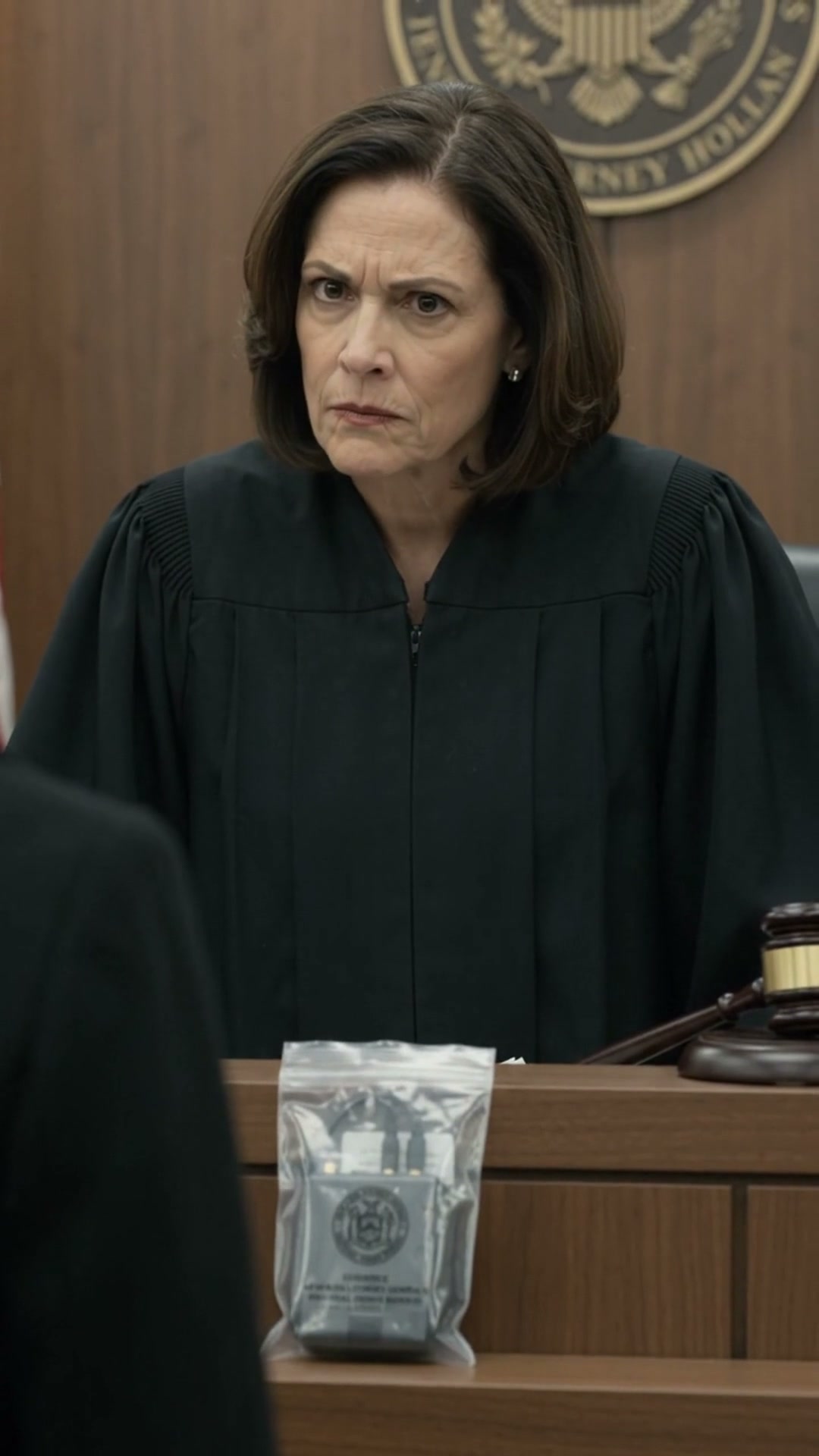
Dr.
Malik examined the pages without accepting his conclusions.
“These papers don’t authorize the procedure you’re requesting.
And they certainly don’t permit us to falsify your daughter’s condition.”
“You’re making this unnecessarily complicated,” my father snapped.
“We’re discussing a living patient’s rights,” she answered.
“They aren’t complicated in the way you seem to think.”
My mother pointed at me.
“She has no husband.
No children.
Our son has an entire future ahead of him.”
I felt a terrible pressure behind my eyes.
I couldn’t tell whether it came from the medication or the realization that my mother had just placed a value on my existence.
And decided it was lower than Adrian’s.
Then the door opened.
Judith Park entered with the nursing supervisor.
She wore a charcoal suit and carried a leather document case.
“Mr.
Marlowe,” she said.
“I suggest you stop talking.”
My father’s confidence faltered.
“Who are you?”
“Lena’s attorney and designated healthcare representative.
I’ve already provided the hospital with her valid documentation.”
She approached my bed, glanced at the monitor, and touched my hand.
For the first time since waking, I felt safe.
“We found the other set, Victor,” Judith said.
She opened a sealed envelope.
Inside was a petition prepared twelve days before my hospitalization.
It declared me permanently incapacitated and asked the court to recognize my father as successor trustee of the Marlowe Hope Fund.
The accompanying medical certificate bore a physician’s name.
The physician had already told Judith that he had never examined me and had not signed it.
“Why did you prepare this before Lena became ill?” Judith asked.
My father stared at the papers.
“That’s a routine contingency.”
“You tried to submit a false medical certificate for a woman who was working, traveling, and attending meetings during the period you claimed she was incapacitated.”
“My daughter is dying!”
“Your daughter is receiving treatment,” Dr.
Malik corrected.
My mother stepped forward.
“You don’t understand what we’ve been through with Adrian.”
Judith looked directly at her.
“I understand your son is seriously ill.
That does not give either of you permission to harm your daughter.”
My father slammed his hand against the counter.
“Do you have any idea how much money we’ve given this hospital?”
“Not enough to buy my professional judgment,” Dr.
Malik said.
The nursing supervisor informed my parents that security would escort them out and that their access to my room was suspended.
As they argued, Judith squeezed my hand.
“Lena, if you can hear me, try to move one finger.”
I concentrated on my right hand.
It felt like lifting a stone.
My index finger moved