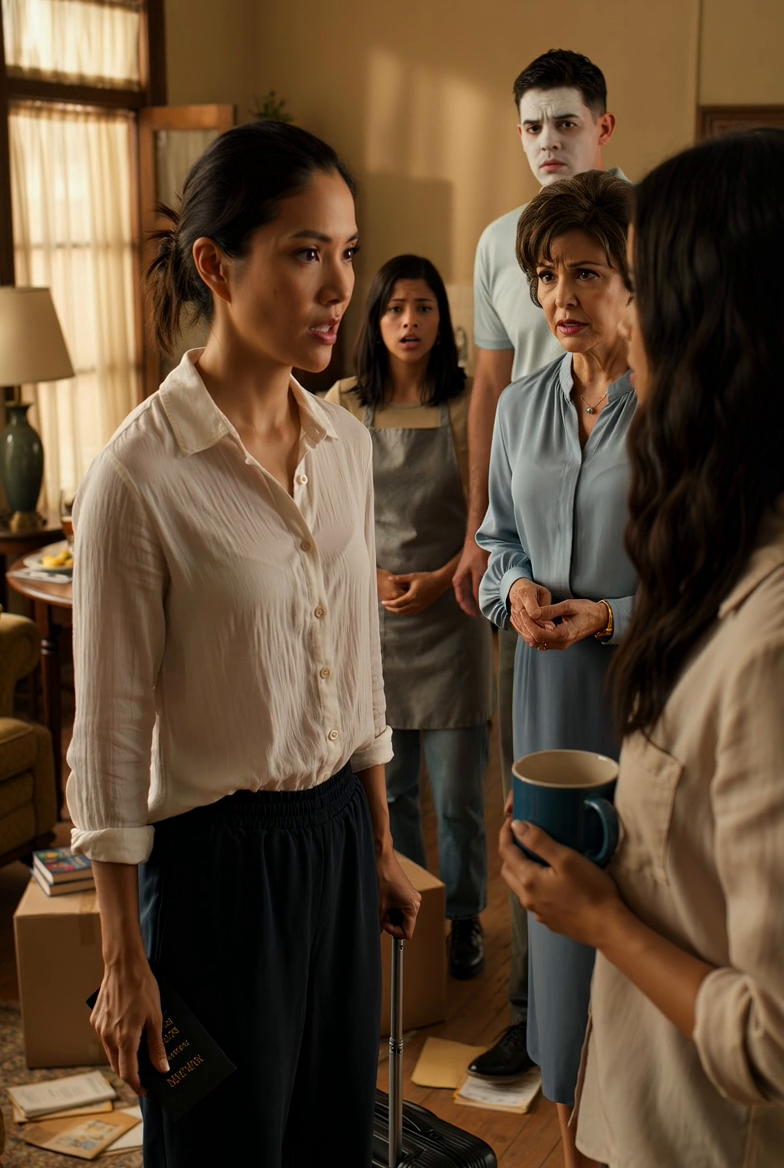
When my parents arrived at my apartment with a real estate agent and matching smiles, I knew they had not come to visit.
The rain had been falling over Madrid since dawn, turning the narrow streets of Chamberí silver and making the wrought-iron balconies outside my windows drip steadily onto the pavement below.
I was standing in my kitchen with cold coffee in one hand and a stack of property reports in the other when I heard a key enter my front door.
My mother still had one.
I had asked for it back twice.
She had ignored me twice.
The lock turned.
“Here it is,” she announced before she even entered the living room.
“Excellent location.
Obviously it needs work.”
A woman’s unfamiliar voice answered, “The neighborhood will help considerably.”
I stepped into the hallway.
My mother, Elena Serrano, stood beneath the entry light in a beige wool coat with a leather handbag tucked beneath her arm.
Behind her was my father, Rafael, tall and gray-haired, wearing the satisfied expression of someone arriving early to watch an execution.
The third person was a woman around forty with dark heels, a fitted navy coat, and a leather folder stamped with the name Ruiz & Valcárcel.
A real estate agent.
My mother saw me and smiled.
Not warmly.
Triumphantly.
“There you are.”
“What are you doing?”
She turned toward the agent as though I were a piece of inconvenient furniture.
“The living room gets decent light in the afternoon.
The kitchen should probably be gutted.”
My father opened one of my balcony doors, looked outside, and made a face.
“The whole place needs renovation.”
I stared at them.
“Why is there a real estate agent in my home?”
My mother finally looked directly at me.
“Because we’re selling this dump.”
The words were delivered lightly, almost cheerfully.
Then she added, “Losers like you shouldn’t pretend to own property in central Madrid.
Rent something appropriate for your situation.”
My father laughed.
“Pack your trash before prospective buyers start coming through.
Nobody wants to see all this clutter.”
The agent’s smile tightened.
Her name, she soon told me, was Marta Ruiz.
“Your parents contacted our office last week,” she explained carefully.
“They said they wanted an appraisal before listing the property.”
“They said they owned it?”
She hesitated.
“Yes.”
That was when I asked the question that changed the atmosphere in the room.
“Did they show you the deed?”
My mother’s expression flickered.
“Don’t be absurd, Adrián.”
“Did they?”
Marta looked at my parents.
“They told me the documentation would be provided after the valuation.”
I nodded.
“Because they don’t have it.”
My father’s amusement vanished.
“Enough.”
“No,” I said.
“Not this time.”
For most of my life, my parents had controlled conversations simply by deciding which version of reality everyone else was required to accept.
My older sister, Lucía, was brilliant because she became a lawyer.
My younger brother, Mateo, was ambitious because he joined my father’s import business.
I was irresponsible because I chose commercial property analysis instead of joining the family company.
It did not matter that I had earned a degree, worked twelve-hour days, built a career, and eventually became a partner in a small consultancy.
In my parents’ story, I was still the disappointing middle child who refused