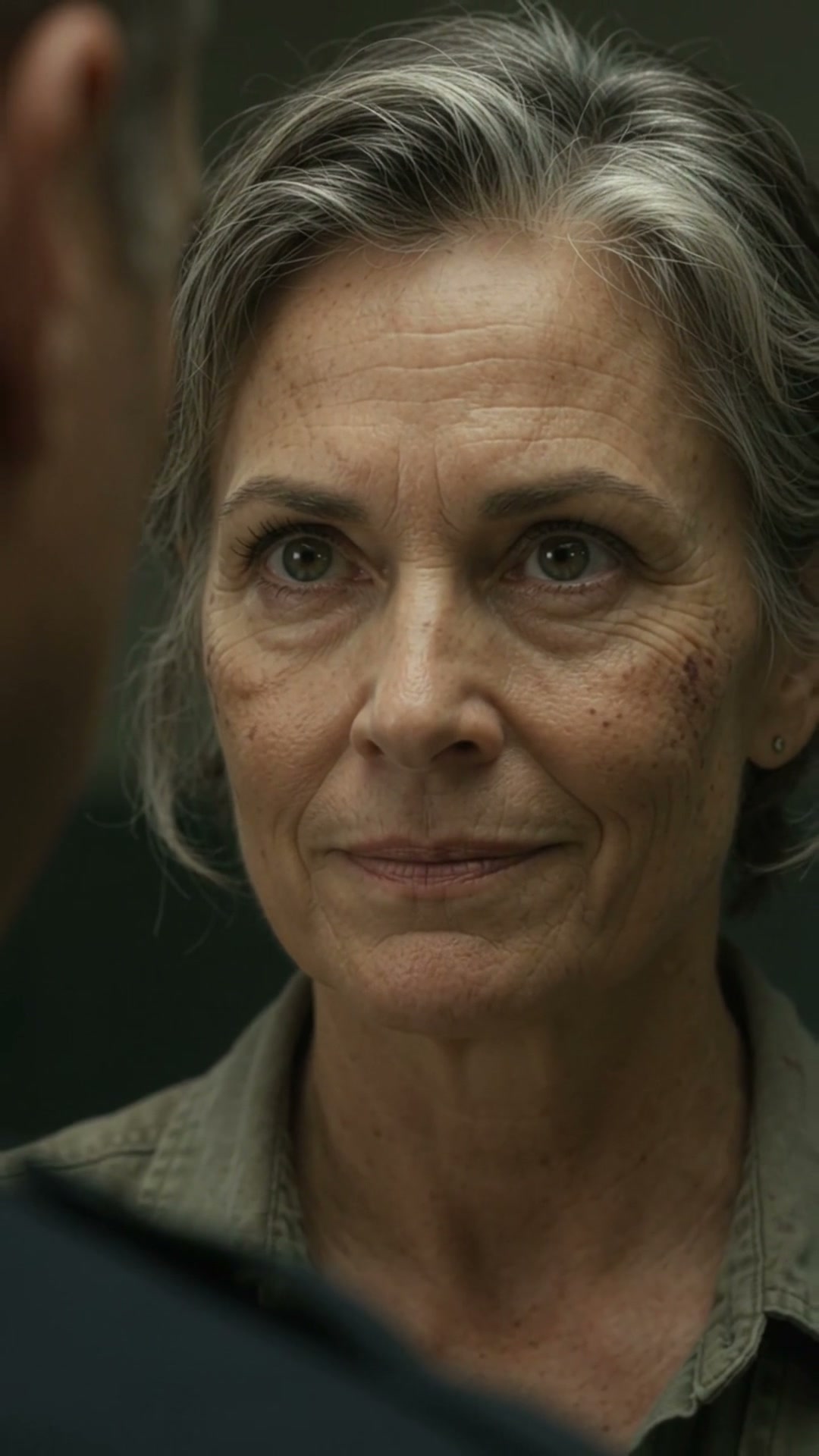
dollars disappeared from her savings and investment accounts.
Gavin said the money had been used to reimburse him for caregiving expenses.
But Mom couldn’t explain why groceries, medication, and utilities had suddenly cost so much.
When she questioned him, he became furious.
One evening, after she refused to sign a document, he held her wrists while Marissa pushed papers toward her.
Later, they began fastening her hands to the bed during arguments, claiming it was necessary because she might wander.
“She says I become dangerous when I’m upset,” Mom whispered.
“But I was only asking where my money went.”
She told me about nights without water beside her bed, meals she couldn’t reach, and appointments Gavin had canceled without telling her.
Then she mentioned the family cottage beside Lake Dunmore.
My father had built much of that cottage himself.
After his death, it became the one place where Mom still felt close to him.
Gavin had arranged to sell it for four hundred and ten thousand dollars.
He told her she no longer needed it.
When she objected, Marissa threatened to put her in a locked care facility where nobody would listen to her complaints.
“Why didn’t you call me?” I asked.
“I tried twice.
Gavin took my phone afterward.
He said you told him you couldn’t handle my problems anymore.”
My chest tightened.
I had never said that.
I had called Mom every Sunday until her phone stopped being answered.
Gavin always claimed she was sleeping, confused, or too tired to talk.
For months, I had mistaken his excuses for updates about her health.
Now I understood that he had been isolating her.
“Mom,” I said, “I believe you.”
She looked at me as though she had been waiting months to hear those words.
With her permission, I photographed the visible injuries and recorded her explanation.
I asked simple questions without telling her what to say.
Then I called emergency services.
I gave the dispatcher our address, explained that an elderly woman had disclosed physical abuse, and said the people responsible were downstairs.
The dispatcher asked whether we could remain somewhere safe until officers arrived.
Before I could answer, footsteps sounded in the hallway.
“Leona?” Gavin called through the bathroom door.
I kept my voice steady.
“Mom isn’t feeling well.
I’m helping her.”
The handle moved.
“Open it.”
The dispatcher told me to stay behind the locked door and avoid confronting him.
I placed my hand over Mom’s trembling fingers.
Then she looked toward the green coat lying across the bathtub.
“There’s something inside,” she whispered.
I glanced at her.
“What do you mean?”
“The bottom seam.
I stitched it closed myself.”
For a moment, I was confused.
Then I remembered all the nights she had spent teaching me how to hide stitches in costume linings.
I found a pair of nail scissors in the bathroom cabinet and examined the coat.
Near the hem, the thread changed slightly in color.
I opened a few stitches.
Inside was a narrow plastic sleeve containing folded papers and several handwritten cards.
My mother had hidden a small archive inside the only piece of clothing she was allowed to keep.
The first document was a formal revocation of power of attorney, prepared by an elder-law attorney named Priya Rao.
It was dated seven