“Oh, God.”
Evan closed his eyes.
“I need you to come to the hospital.”
Another silence followed.
This one felt different.
Calculated.
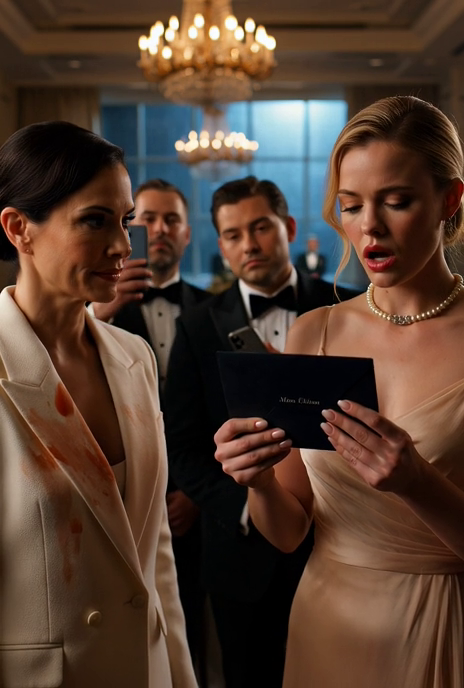
“Evan,” she finally said, “tonight is Caleb and Claire’s engagement dinner.”
He opened his eyes.
Rainwater dripped from the ceiling edge of the parking structure.
“What?”
“Claire’s parents drove in from out of town.
Everyone is here.”
“Mom, Rachel is dead.
Miles is dead.”
“I understand.”
“Then come here.”
She lowered her voice.
“Your father and I can’t simply walk out in the middle of dinner.
People would ask questions.”
“Tell them.”
His father came onto the phone.
“Evan.”
“Dad, please.”
Richard Cole had always spoken in the same measured tone, whether discussing taxes, broken appliances, or family arguments.
That night was no different.
“There is nothing we can do at the hospital right now.”
Evan stared at a concrete pillar marked LEVEL B.
“You can stand next to me.”
His father exhaled.
“Caleb needs us here.
This evening matters to him.”
“My son just died.”
“And that is tragic.
But you’ve always been the stronger one.”
The stronger one.
Evan had heard that phrase his entire life.
When Caleb failed classes, Evan was told not to make him feel inferior.
When Caleb wrecked their father’s car, Evan spent a weekend helping repair the garage because Caleb was “going through a difficult phase.”
When Evan got married, his parents left the reception early because Caleb had argued with his girlfriend.
Evan had always been the dependable son.
Until dependable became another word for disposable.
“Put Caleb on,” Evan said.
His brother answered reluctantly.
“What?”
“Miles is dead.
Rachel too.”
“Mom told me.”
“I need someone here.”
Caleb’s voice tightened.
“Evan, Claire’s whole family is sitting at the table.
This is supposed to be our night.”
“Your nephew died.”
“I know.
And that’s horrible.
But what do you want me to do right now?”
“Show up.”
Caleb said nothing.
Then, incredibly, he asked, “Could this not have waited until tomorrow?”
Evan ended the call.
For the next two days, friends handled what family did not.
Rachel’s bookstore manager, Nina, went with Evan to the funeral home.
Miles’s soccer coach organized food deliveries.
Their neighbor, Mrs.
Alvarez, retrieved what little could be salvaged from the apartment after investigators released the unit.
Among the surviving items were Rachel’s metal bookmark, Miles’s scorched soccer medal, three photographs damaged by water, and the kitchen cabinet hinge Evan had intended to replace.
He kept the hinge.
He could not explain why.
The memorial service took place four days later in a neighborhood church Rachel had once described as “the only quiet building in the city that doesn’t feel lonely.”
Her coworkers filled the front rows.
Miles’s teammates wore their blue jerseys.
His school counselor placed a stack of handwritten notes near his photograph.
Evan reserved three seats on the aisle.
His mother.
His father.
Caleb.
All remained empty.
At 8:12 that morning, Diane texted him.
“Your father’s back is very bad today.
Caleb is emotionally overwhelmed.
We think it is better to remember Rachel and Miles privately.
We love you.”
Evan read it once.
Then he handed the phone to Nina and asked her to turn it off.
That evening, unable to sleep, he made the mistake of opening social media.
Claire had posted