had handled my grandfather’s estate.
Through Nina, I formed Reed House Holdings LLC.
The company purchased the property from the lender for $568,000 in cash, using the separate funds I had inherited and preserved.
It was a substantial portion of everything my grandfather had left me.
I didn’t consider it an investment.
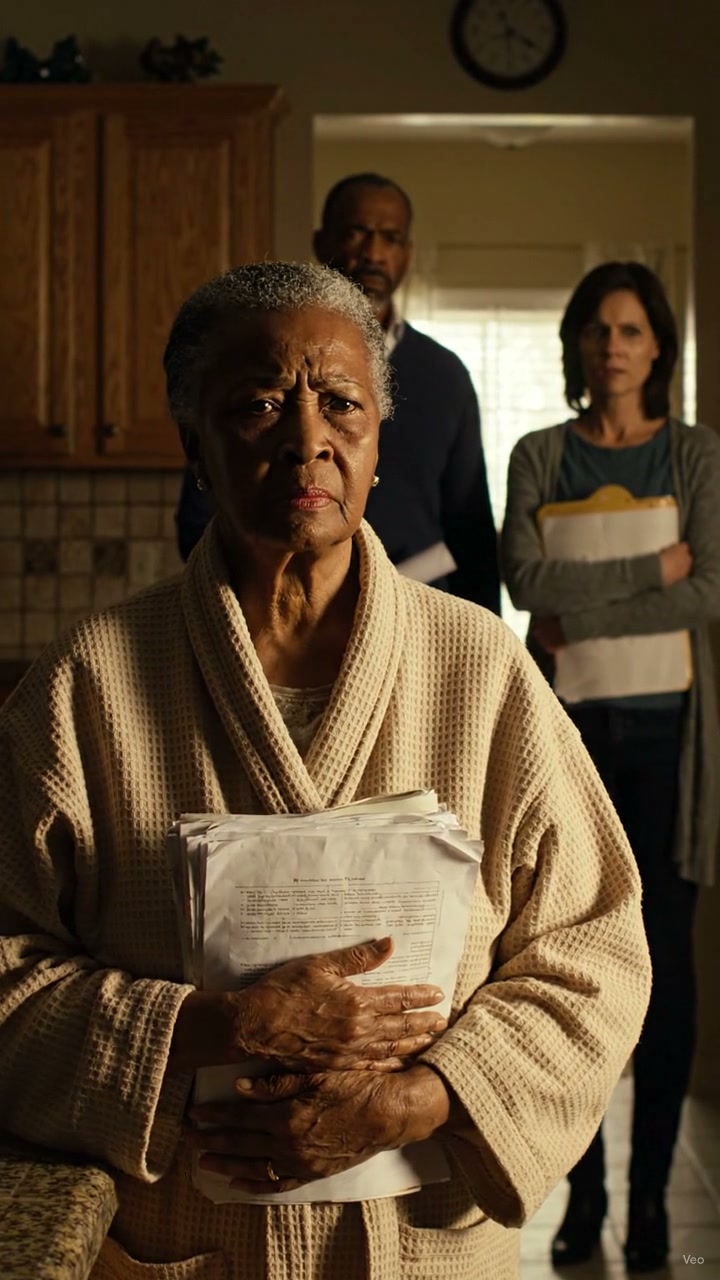
I considered it a way to keep my husband’s parents from being displaced.
Nina arranged a long-term lease allowing Thomas and Elaine to remain in the farmhouse for a modest monthly payment.
A property manager handled the paperwork, and my identity as the company’s owner was never volunteered to the family.
I wanted the Mercers to retain their dignity.
Thomas was proud and stubborn, and I knew he would struggle to accept that his daughter-in-law had rescued the house after his own financial decisions had failed.
I also wanted to surprise Dylan after our babies arrived.
I imagined giving him a copy of the deed, explaining that our children would still have Christmas mornings in the home he remembered, and watching relief replace the worry he had carried for months.
Instead, Sabrina Vale stepped into the story.
She hosted a fundraising dinner for what she called the Mercer Homestead Preservation Initiative.
She invited business owners, local politicians, and newspaper reporters.
At the dinner, she implied that her generosity and financial connections had secured the farmhouse for the family.
A photograph circulated showing her standing beside Thomas and Elaine on the front steps.
Dylan appeared at her side, smiling as though he had personally won a national award.
The caption described Sabrina as the woman who had saved a treasured family home.
I stared at that photograph on my phone for a long time.
I knew Sabrina hadn’t purchased the property.
I had the closing documents in my attorney’s office and the bank transfers proving exactly where the purchase money came from.
But what I didn’t know was whether Sabrina was merely exaggerating her involvement or deliberately collecting donations under false pretenses.
I asked Nina to look into it.
“Don’t confront anyone until we understand what she’s actually claiming,” Nina advised.
“There may be a difference between public credit-taking and financial fraud.
We need records.”
So I waited.
My pregnancy was becoming more difficult.
I was exhausted, my ankles were swollen, and I had stopped taking freelance design contracts because my doctor wanted me to reduce my workload.
Dylan interpreted my temporary lack of income as permanent helplessness.
He started making comments about how much he earned and how little I contributed.
At first, I dismissed them as stress.
Then he began mentioning Sabrina during arguments.
“Sabrina doesn’t sit around worrying,” he would say.
“She gets things done.”
I once asked him whether he was having an affair.
He laughed so sharply that I felt embarrassed for asking.
“She’s helping my family, Anna.
Maybe you should try being grateful instead of jealous.”
Two weeks before the twins were born, Nina called with troubling news.
A private lender had requested documents relating to Reed House Holdings and the Orchard Road property.
Someone had represented that the company intended to transfer the house into a new preservation trust.
I had authorized no such transaction.
Nina contacted the lender’s fraud department, notified the authorities, and placed additional monitoring on the property records.