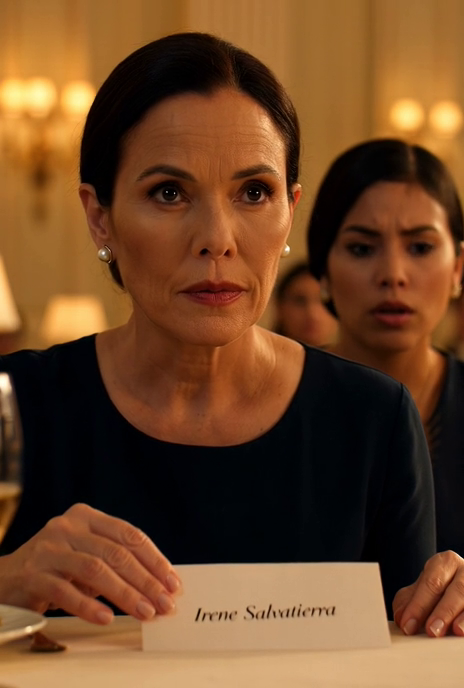
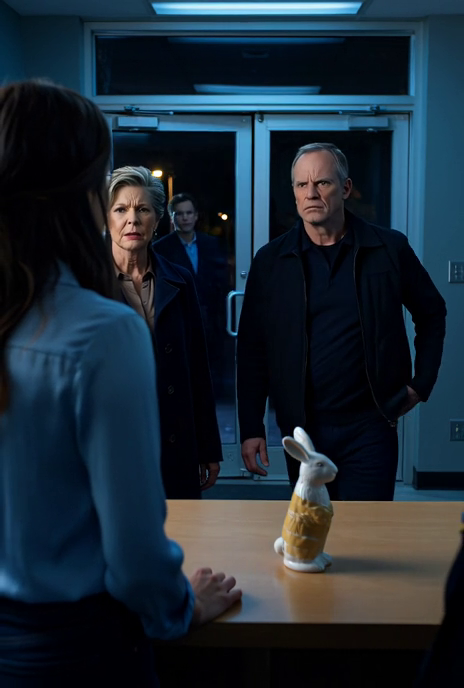
It did not show the entire room, but it recorded Clara walking toward the hallway, Margaret stepping into her path, and Sonia directing her back toward the living room.
That footage changed the tone of the investigation.
Sonia’s attorney eventually advised her to cooperate.
Through counsel, she acknowledged that Margaret had paid her an additional private fee beyond the care contract we knew about.
The extra money was tied to producing detailed behavioral reports about Clara.
Sonia claimed she believed Margaret was concerned about postpartum mental health.
The emails made that explanation difficult to accept.
One contained a sentence that I will never forget.
We need Elias to see instability before the baby makes him sentimental.
The message was from my mother.
Clara read it once.
Then she handed the page back to Rebecca and said, “I don’t ever want her alone with my child.”
“She won’t be,” I answered.
This time, it was not reassurance.
It was a decision.
We obtained a protective order while the criminal investigation continued.
Sonia’s professional conduct was referred to the appropriate licensing and regulatory authorities, which conducted their own review.
Months later, she surrendered the credential under which she had been providing certain nursing services while disciplinary proceedings were pending.
The forged document became a separate issue.
Investigators determined that Margaret had obtained an old signature sample from a corporate record and used it to create the false paperwork.
Because the document had been sent to my attorney rather than successfully executed, the exact charges and legal arguments were more complicated than I first imagined, but prosecutors treated the evidence seriously.
Eventually, Margaret accepted a plea agreement involving offenses connected to the falsified document and the unlawful conduct in our home.
She received probation, mandatory counseling, financial penalties, and strict no-contact conditions regarding Clara.
Some relatives accused me of destroying the family.
That phrase appeared in emails, voicemails, and one handwritten letter from an aunt who had not spoken to me in six years but suddenly possessed strong opinions about forgiveness.
I stopped answering.
Clara and I had more important work to do.
We sold the waterfront mansion.
Margaret called it the final insult.
To us, it was oxygen.
We bought a smaller house with an ordinary backyard, a kitchen that always smelled faintly of coffee, and a nursery window facing an old maple tree.
There was no marble grand staircase.
No family portrait gallery.
No security staff.
No room preserved because some Mercer ancestor had once slept there.
It felt like ours.
Clara began therapy before Julian was born.
I joined her for several sessions because I had spent too many years believing that supporting someone meant waiting until they explicitly demanded rescue.
I had to learn something harder.
Listening the first time.
Three weeks before Clara’s due date, we were assembling a crib when she tossed an instruction sheet at me and announced that I had installed one side backward.
I told her the manufacturer was clearly wrong.
She laughed so hard she had to sit down.
That laugh nearly broke my heart.
Not because she was sad.
Because I realized how long it had been since I had heard it without fear beneath it.
Julian arrived at 3:18 on a rainy Thursday morning after fourteen hours of labor.
He weighed