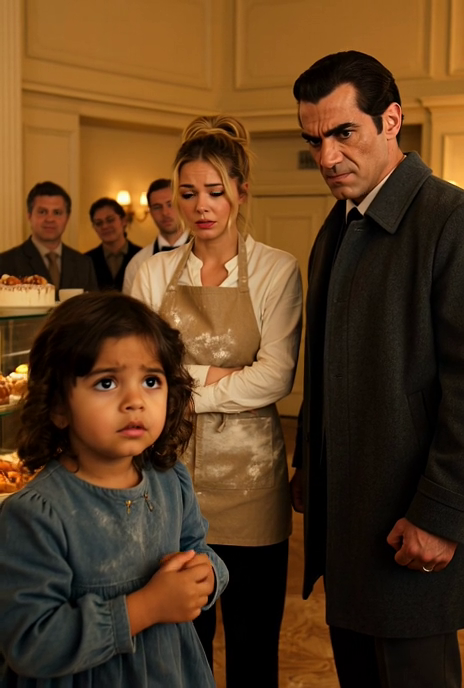
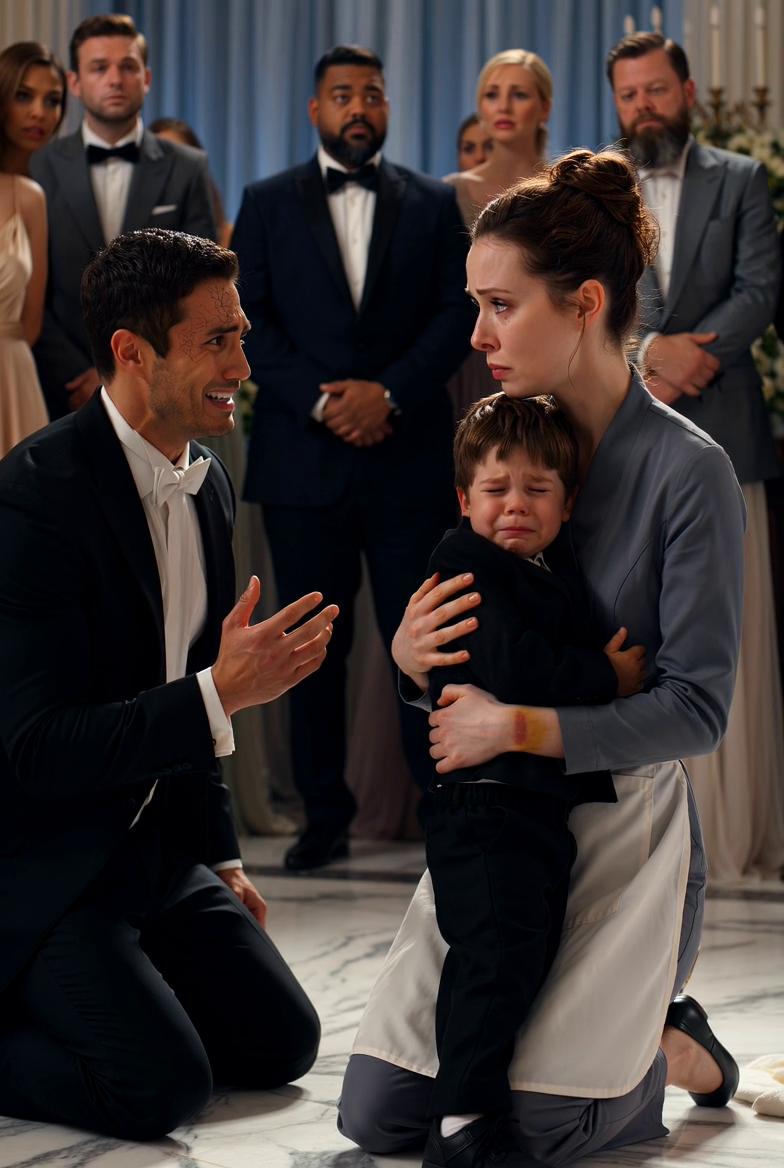
The baby’s scream reached me before I even opened the front door.
It was sharp, desperate, and unlike anything I’d heard from our newborn son before.
I dropped my keys in the hallway and ran toward the living room, my heart pounding as I called my wife’s name.
Then I saw her.
Clara lay motionless on the sofa, one arm hanging toward the floor.
Her face was frighteningly pale, and her hair clung to her damp forehead.
Our son, Leo, screamed in his bassinet nearby, his tiny fists trembling as he struggled against the blanket.
At the dining table, my mother was eating dinner.
A full plate of roast chicken, rice, and vegetables sat before her.
The kitchen was a mess, a pot had boiled over on the stove, and a pile of laundry lay abandoned beside the sofa.
It was obvious that someone had spent hours preparing the meal.
That someone was supposed to be resting after giving birth just weeks earlier.
My mother glanced at Clara, took another bite, and muttered, “Drama queen.”
For a moment, I couldn’t move.
I had spent thirty-four years believing my mother was a strong woman who simply had high standards.
She called her insults honesty and her demands discipline.
Whenever she criticized someone, she insisted she was only trying to help.
I’d believed her because she was my mother.
But standing in that room, watching her eat while my wife lay unconscious, I finally understood the difference between strength and cruelty.
I lifted Leo from his bassinet and held him against my chest.
Then I knelt beside Clara and gently touched her cheek.
“Clara? Baby, can you hear me?”
Her eyelids fluttered.
She tried to answer, but only a faint breath escaped her lips.
I turned toward my mother.
“What happened?”
She sighed as though I’d interrupted an important meeting.
“She got herself worked up.
I told her to finish dinner, but she started complaining about being tired.
New mothers are always so dramatic.
I raised you without fainting every five minutes.”
“You made her cook this entire meal?”
“She offered,” my mother replied.
Clara’s fingers moved weakly against mine.
“No,” she whispered.
That single word changed everything.
My mother frowned.
“Don’t encourage her.
The house is a disaster, the baby cries constantly, and she thinks exhaustion is an excuse to do nothing.
Someone has to teach her responsibility.”
I looked at the woman who had raised me and wondered how many times I’d mistaken fear for respect.
“I’m taking my wife and son to the hospital,” I said.
“Don’t be ridiculous.
She’ll be fine after a nap.”
I didn’t argue.
I called emergency medical services, explained that my wife had collapsed shortly after childbirth, and followed their instructions while waiting for help.
Once Clara was receiving care, I made sure Leo was safely secured and gathered the essentials we needed.
My mother followed me to the front porch, furious that I was leaving.
“Where do you think you’re going?” she demanded.
“This is my son’s house! You can’t just walk out because your wife wants attention.”
I stopped and looked at her.
“Exactly.
It’s my house.
And Clara is my wife.”
Her expression faltered.
I left without another word.
At the hospital, doctors evaluated Clara and determined that she was severely