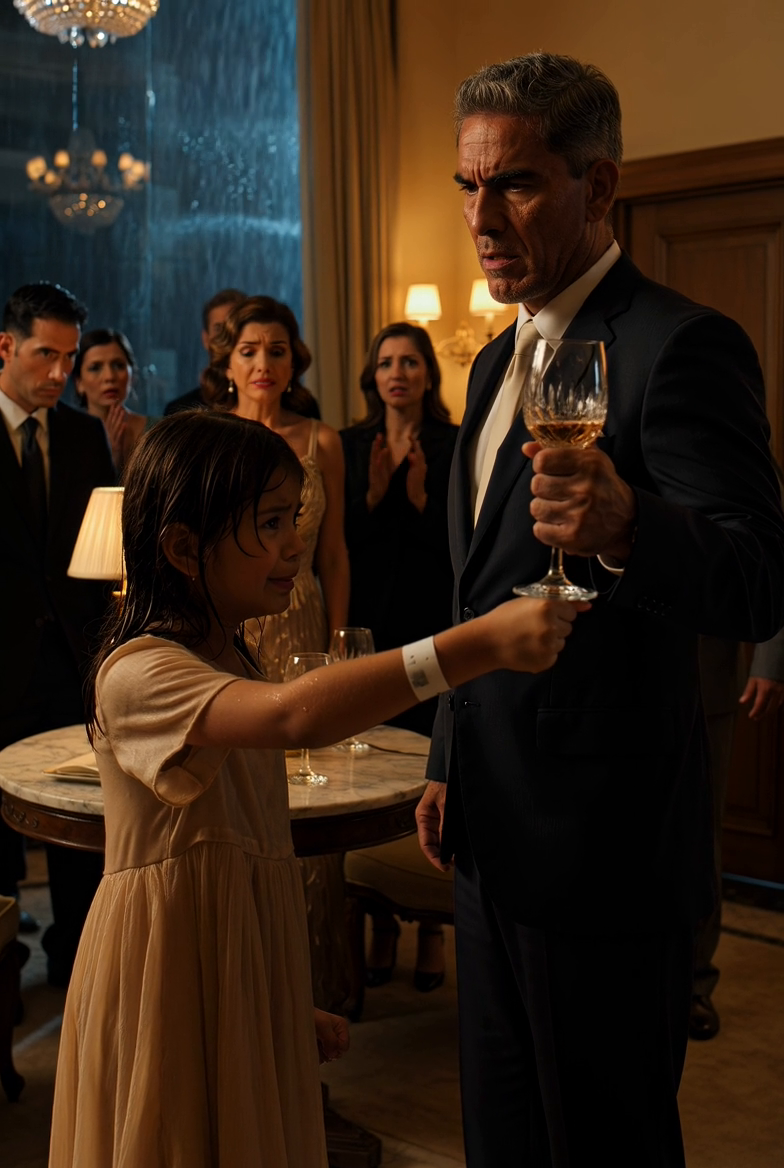
By the third note, Malcolm Vale stopped breathing.
It happened in the middle of his seventy-fourth birthday celebration, beneath three enormous chandeliers in the ballroom of Boston’s Brighton Crown Hotel, while nearly four hundred guests watched a barefoot eight-year-old girl sit at a black concert grand piano she had never touched before.
Until that moment, the evening had gone exactly as Malcolm’s older sister, Beatrice, had planned it.
Politicians had arrived through a private entrance.
Investors from New York were drinking champagne beside museum trustees.
The hotel staff moved between marble columns carrying silver trays.
A string quartet had performed during dinner, followed by Malcolm’s thirty-six-year-old son, Julian, who had been asked to play the piano before the birthday toast.
Julian was good.
More than good.
Years of lessons had made his technique precise and effortless.
His fingers crossed the keyboard with disciplined confidence while guests nodded appreciatively.
But downstairs, eight-year-old Elsie Reed was listening for an entirely different reason.
Her mother, Nora, had taken an emergency catering shift that afternoon after another server called in sick.
Nora was thirty-one, worked two jobs, and had been calculating which bill could safely be late when the babysitter canceled ninety minutes before she was supposed to leave home.
The banquet manager had finally agreed to let Elsie sit in a staff room beside the kitchen.
“You stay right here,” Nora told her.
Elsie nodded solemnly.
One of the straps on her inexpensive flats had broken on the subway ride over, so she had kicked both shoes off beneath the stool.
Nora left her with a sandwich, apple juice, colored pencils, and strict instructions not to wander.
For almost an hour, Elsie obeyed.
Then Julian began to play upstairs.
The notes floated through the service corridor and down the stairwell.
Elsie stopped coloring.
Music had always had that effect on her.
Nora could not afford lessons, but there was an old upright piano at the neighborhood community center.
Whenever the room was empty, Elsie practiced there.
She learned mostly by ear, repeating melodies Nora hummed while cooking or folding laundry.
One melody mattered more than all the others.
Nora called it the rain song.
She said her own mother had taught it to her.
Elsie could not remember a time when she had not known it.
That night, curiosity defeated obedience.
She followed the music upstairs.
By the time Nora discovered the empty stool, Elsie was already standing beneath the chandeliers.
Guests nearest the ballroom entrance noticed her first.
A child in a plain yellow dress, without shoes, staring at Julian and the grand piano as though she had wandered into another world.
Some people smiled.
Others frowned.
Beatrice Vale did neither.
“Someone remove her,” she said to a hotel supervisor.
But Elsie had already taken three steps toward the piano.
Julian finished his piece and looked over.
Elsie raised her hand as though she were in school.
“Can I try?”
A ripple of laughter moved through the room.
Nora arrived at the doorway at that exact moment.
Her heart dropped.
“Elsie.”
The girl turned.
Nora hurried toward her, whispering apologies to anyone who would listen.
“I’m sorry.
She was supposed to stay downstairs.
Elsie, sweetheart, come with me.”
Beatrice’s expression hardened.
“This is a private function.”
Julian looked at Elsie, then at