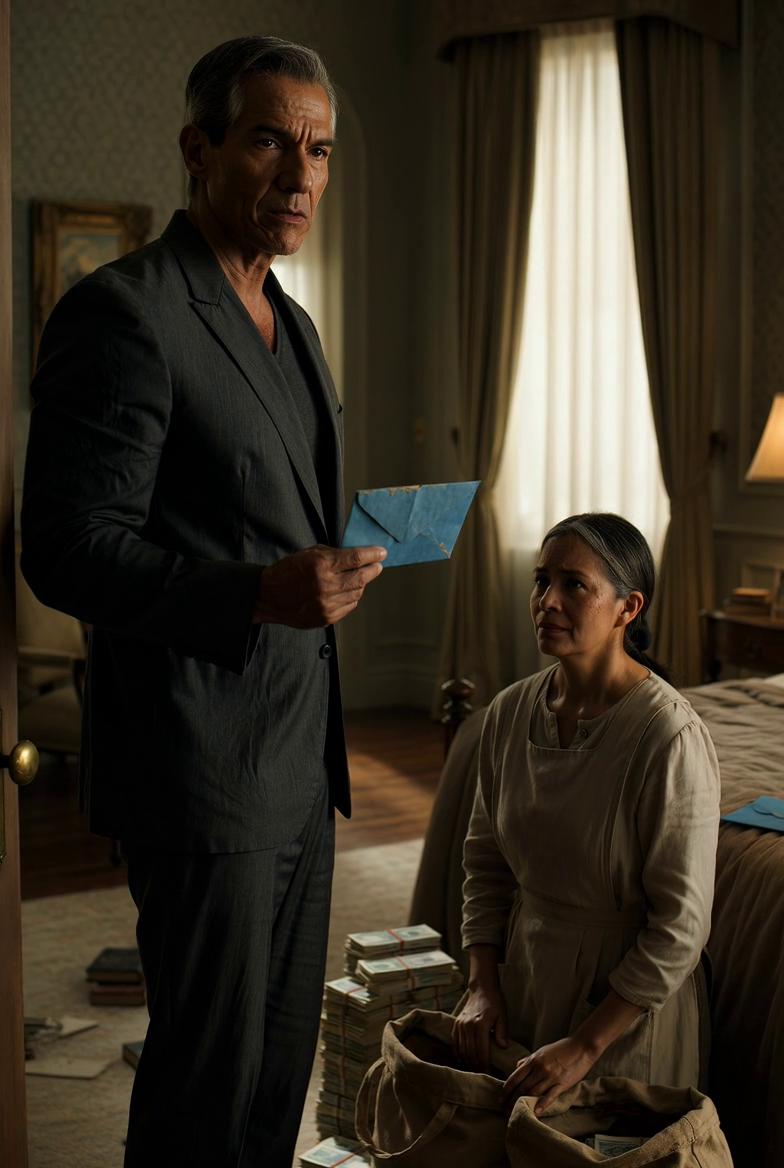
The first laugh came from somewhere behind my father.
It was quiet, almost polite, but it landed harder than an insult.
“You couldn’t afford a lawyer if your life depended on it,” Julian Mercer said, leaning back in his chair with the easy confidence of a man who had spent sixty years assuming confidence and authority were the same thing.
His attorney, Arthur Pell, sat beside him in a tailored charcoal suit, turning pages in a thick binder without looking up.
Across the aisle, I stood alone in Navy service dress blue with a narrow red folder at my elbow.
My father looked me over and smiled.
“Fourteen years away and she comes back dressed like that, expecting everyone to be impressed.”
I did not answer.
The courtroom in Hartwell County, Virginia, smelled of varnished wood, paper, and rain carried in on wet coats.
Outside, October wind moved through the courthouse square.
Inside, every sound seemed amplified: a cough, a chair leg scraping, the soft click of Judge Miriam Cole’s pen.
“Mr.
Mercer,” she said, “that is enough.”
He lifted both palms in a gesture of innocence.
I kept my eyes on the bench.
Two weeks earlier, a sheriff’s deputy had found me at Alder Ridge while I was repairing a broken gate.
The old farm sat beyond the last subdivision on the north edge of Hartwell, sixty-two acres of pine, pasture, creek bed, and one weathered white house my grandfather had built with his own hands.
Scout, my grandfather’s aging black lab, had been lying beneath the porch when the deputy walked up the drive.
“Commander Mercer?”
“Yes.”
He handed me a thick envelope.
I saw my father’s name before I opened it.
Julian Mercer v.
Mara Mercer.
Quiet title.
Unlawful occupancy.
Declaratory relief.
My father claimed Alder Ridge belonged to him.
The petition described me as an estranged daughter who had vanished into the military, returned years later without permission, and moved into property she did not own.
It said I was financially unstable.
It said I had contributed nothing to the land.
It said my grandfather had died without making any enforceable transfer to me.
That last claim told me exactly what my father was trying to do.
He did not merely want the house.
He wanted the land beneath it.
Three months before the lawsuit, Hartwell County had approved preliminary plans for a highway extension less than two miles from Alder Ridge.
Property values rose almost overnight.
A development company called Crestline Communities began buying farms along the corridor for gated neighborhoods and retail sites.
Alder Ridge was the largest undeveloped parcel still sitting between the new road and the river.
I made one phone call to the county recorder, one to the bank that had administered my grandfather’s trust, and one to the title company named in my father’s filing.
Then I opened the old fireproof box Grandpa had told me never to throw away.
By midnight, I knew two things.
First, my father was lying.
Second, he had lied in writing.
That mattered to me in a way he could not have understood.
He thought I had spent fourteen years “doing Navy paperwork.”
In reality, I was Commander Mara Mercer, Judge Advocate General’s Corps, and most of my recent work involved financial misconduct, procurement